

Air travel in Bangladesh to get costlier
CAAB proposes increase in aeronautical and non-aeronautical charges; awaits Ministry's approval

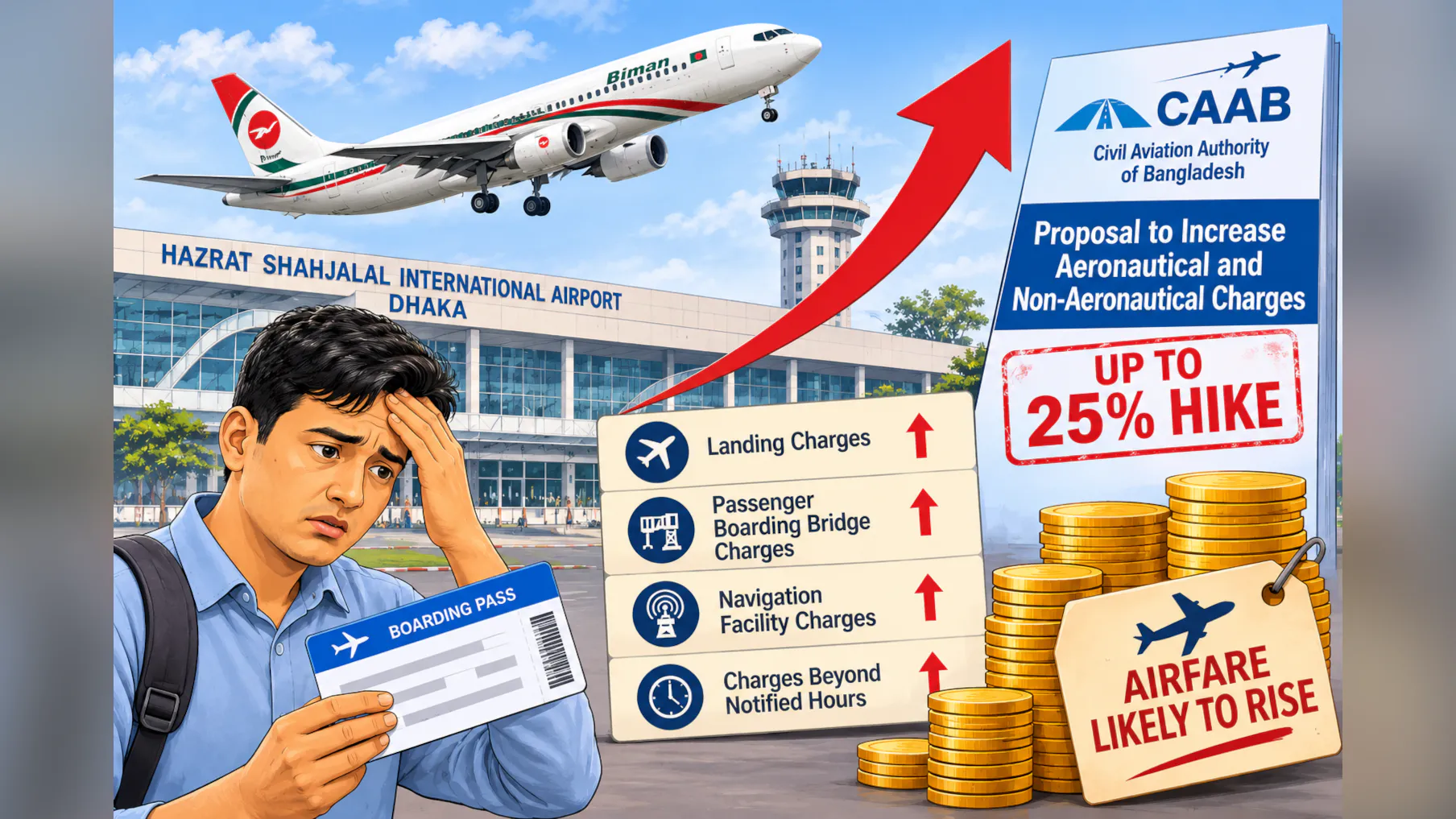
Dhaka: Air travel in Bangladesh is set to become more expensive as the Civil Aviation Authority of Bangladesh (CAAB) has proposed a substantial revision of various aeronautical and non-aeronautical charges collected from airlines, passengers, and other aviation-related service providers. The proposal, which includes increases of up to 25 per cent in several major charges, is currently awaiting approval from the Ministry of Civil Aviation and Tourism.
The proposed revision covers a wide range of charges, including aircraft landing, passenger boarding bridge, route navigation facilities, passenger embarkation fees, and services provided beyond the notified operating hours of airports. If approved, the revised rates are likely to increase airlines' operating costs, with the additional financial burden potentially being passed on to passengers through higher airfares and other travel-related charges.
According to a presentation prepared by CAAB on the review and re-determination of aeronautical and other related charges, the authority is seeking to revise rates that have largely remained unchanged since 2013. The presentation points out that the existing rates were determined under the Civil Aviation Rules 1984, with the last major revision of aeronautical charges taking place after a gap of approximately 22 years.
Major proposed increases
Under the proposal, aircraft landing charges for both international and domestic flights would increase by 25 per cent across different aircraft weight categories.
For international flights, the existing landing charge for aircraft weighing up to 10 tonnes is US$52.50, which would rise to US$65.60. For aircraft weighing between 20 and 50 tonnes, the charge would increase from US$150–375 to US$188–469, depending on aircraft weight.
For domestic operations, landing charges would also rise by 25 per cent. The rate for aircraft weighing up to 10 tonnes, for example, would increase from Tk 53 to Tk 66.25 per 1,000 kg.
Passenger boarding bridge charges, excluding the Third Terminal of Hazrat Shahjalal International Airport (HSIA), are also proposed to increase by 25 per cent. The charge for aircraft weighing below 100 tonnes would rise from US$100 to US$125 for the first two hours of use. For aircraft weighing 300 tonnes and above, the charge would increase from US$250 to US$312.50.
Route Navigation Facility Charges (RNFC), applicable to aircraft using Bangladesh's air navigation facilities, are proposed to increase by 10 per cent. For international flights, the charge for aircraft weighing up to 2,000 kg would rise from US$12 to US$13.20, while the charge for aircraft exceeding 200 tonnes would increase from US$450 to US$495.
The authority has also proposed higher charges for flights operating beyond the notified hours of operation at airports that do not operate round the clock. For international flights, the airport and aerodrome facility charge would increase from US$225 to US$285 per hour or part thereof. The corresponding domestic charge would rise from Tk 4,500 to Tk 6,000 per hour.
Charges for the use of air route navigation facilities beyond notified operating hours would also increase from US$90 to US$115 per hour.
Higher passenger embarkation fees
Passengers departing from Bangladesh may also face higher airport-related charges under the proposal.
For terminals other than the Third Terminal of HSIA, the existing international embarkation fee of Tk 500 is proposed to be replaced by a charge of US$6 per departing passenger. The domestic embarkation fee, currently Tk 25, would increase to Tk 100.
For the Third Terminal of HSIA, the embarkation fee has been proposed at US$12.50 per passenger.
These charges would be in addition to the air ticket price and other applicable taxes and fees, thereby increasing the overall cost of air travel.
Helicopter operations to face steep increases
The proposed revision also includes a significant increase in helicopter landing charges.
At present, the combined landing, route navigation, and security charges for a helicopter weighing below 2,000 kg range between Tk 450 and Tk 500 per landing, while those for helicopters weighing above 2,000 kg range between Tk 600 and Tk 800.
Under the new proposal, a flat charge of Tk 3,000 per domestic operation and US$50 per international operation would be introduced.
CAAB's justification
CAAB has cited a significant rise in operational and infrastructure maintenance costs as the principal justification for reviewing the existing rates.
According to the presentation, the authority's annual operating expenditure has increased from Tk 1,186 crore in FY2015-16 to approximately Tk 3,242 crore in FY2025-26. Aeronautical charges account for around 60–65 per cent of CAAB's total revenue.
The authority has also pointed to substantial investments in airport infrastructure, including the Third Terminal of HSIA, taxiways, the new cargo village, and improvements to runways, aprons, and terminal facilities at different airports.
The modernization and maintenance of Communication, Navigation, and Surveillance/Air Traffic Management (CNS/ATM) facilities, including radar, VOR, DME, and ILS systems, have also been cited as major expenditure requirements.
Another significant consideration is the financial obligation arising from the JICA-funded Third Terminal project. CAAB's presentation estimates that annual loan repayment obligations related to the project could amount to approximately Tk 1,250 crore.
The authority has further argued that some of Bangladesh's existing charges, particularly landing charges and passenger service/embarkation fees, remain comparatively low against those of certain neighboring countries.
Industry consultation remains important
While CAAB has made a case for revising the charges, the proposed increases are likely to generate considerable interest among airlines, travel agents, airport service providers, and other aviation stakeholders, given their potential implications for the country's air transport market.
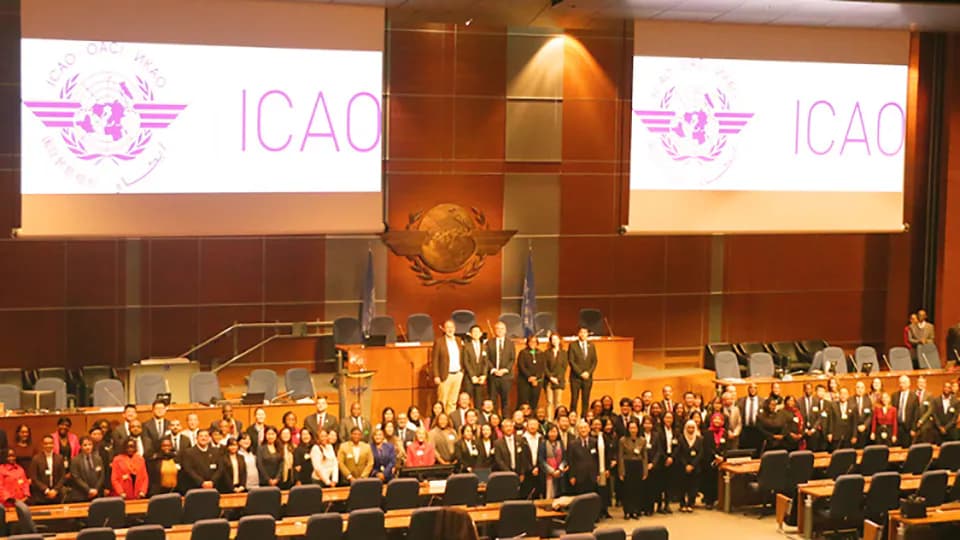
The presentation itself refers to the International Civil Aviation Organization's (ICAO) recommendations on airport and air navigation service charges. These emphasize four fundamental principles: non-discrimination, cost-relatedness, transparency, and consultation with users.
ICAO's guidance also recommends that users or their representative organizations normally be given at least four months' advance notice when a revision of charges or introduction of new charges is contemplated. They should also be provided with relevant financial and operational information and an opportunity to submit their views before a final decision is taken.
The CAAB committee, in its recommendations, has proposed increases of up to 25 per cent in landing charges, passenger boarding bridge charges (excluding HSIA's Third Terminal), and charges for operations beyond notified hours, alongside a 10 per cent increase in route navigation facility charges.
It has also recommended transferring overflight charge revenue from the HSIA account to the CAAB headquarters account and introducing royalty arrangements for certain commercial operators using CAAB infrastructure, including cargo and ground-handling service providers. A royalty arrangement has also been proposed for the use of the hydrant refueling infrastructure installed at the Third Terminal's expanded apron.
With the proposal now awaiting the Ministry's approval, the aviation industry will be watching closely to see how the government proceeds with the revision and whether adequate consultation with stakeholders takes place before its implementation.
If approved, the revised charges will mark a significant change in the cost structure of Bangladesh's aviation sector, with implications extending beyond airlines to passengers, cargo operators, and the wider travel and tourism industry.