

Proposed 15-year restriction on building airports within 100 km of Dhaka raises concerns over long-term aviation capacity

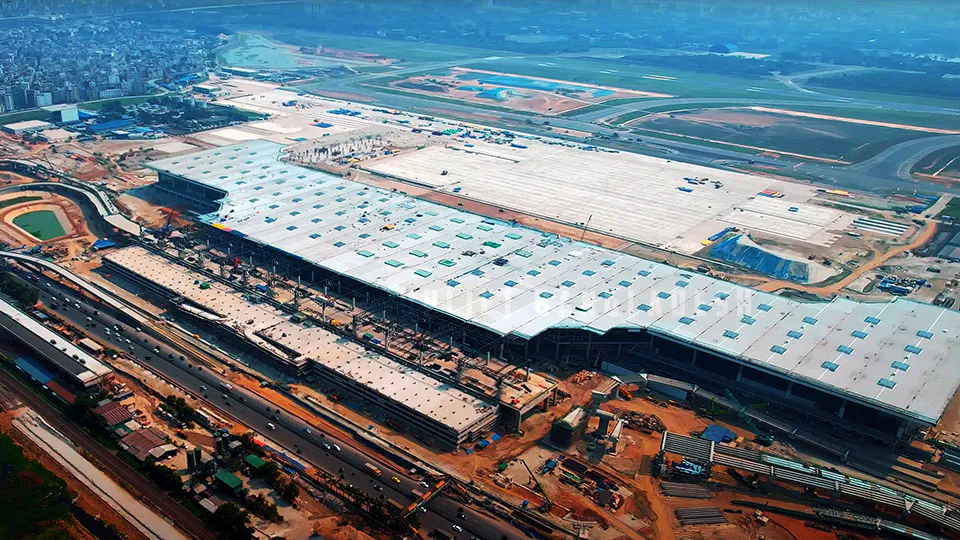
The draft agreement with
the Japanese consortium reportedly includes a provision preventing any other
civilian airport within a 100-kilometer radius of Dhaka from commencing
commercial operations for 15 years. Although another airport could still be
planned and constructed, it would not be permitted to compete commercially with
Hazrat Shahjalal International Airport (HSIA) during this period.
The proposed condition
has raised questions about whether a commercial operating agreement should
determine the country's broader aviation infrastructure development priorities
for the next decade and a half.
The timing is
particularly significant as Bangladesh's aviation market continues to grow,
placing increasing pressure on existing airport infrastructure. According to
Civil Aviation Authority of Bangladesh (CAAB) projections, annual passenger
traffic at HSIA could reach approximately 33 million by 2045, while its
estimated handling capacity would remain around 24 million even after
completion of the Third Terminal and two proposed pier extensions.
Rapid urbanization around
the existing airport has also made further expansion increasingly difficult,
including the construction of a second independent runway.
This makes the prospect
of developing another international airport near Dhaka an important consideration
for the country's long-term aviation strategy.
The proposed restriction
therefore presents a potential contradiction between the country's future
infrastructure requirements and the commercial protection being considered for
the prospective terminal operator.
Aviation infrastructure
is a long-term national asset, and decisions concerning the development of
additional airports should ideally remain within the government's policy and
planning jurisdiction. While protecting the commercial viability of a major
infrastructure investment is understandable, such protection should not
unnecessarily limit future development options.
There are also questions
about whether the proposed arrangement adequately considers the growth of
domestic and international air traffic, cargo transportation, aircraft
movements and the country's potential to attract transit passengers.
For Bangladesh to emerge
as a competitive regional aviation hub, airport capacity, operational
efficiency, connectivity and cargo-handling facilities will all require
substantial expansion. A second international airport serving the greater Dhaka
region could eventually become an important component of that strategy.
The issue has become more
pertinent following the government's reported plan to develop another
full-fledged international airport at Trishal in Mymensingh, where a
feasibility study is expected. The proposed 100-kilometer restriction could
have implications for the commercial operation of such a facility, depending on
its location and the final contractual provisions.
Meanwhile, negotiations
with the Japanese consortium have reportedly been completed, although the
operating agreement remains subject to finalization and necessary approvals.
The consortium comprises
Japan Airport Terminal Co Ltd, Sumitomo Corporation, Nippon Koei and Narita
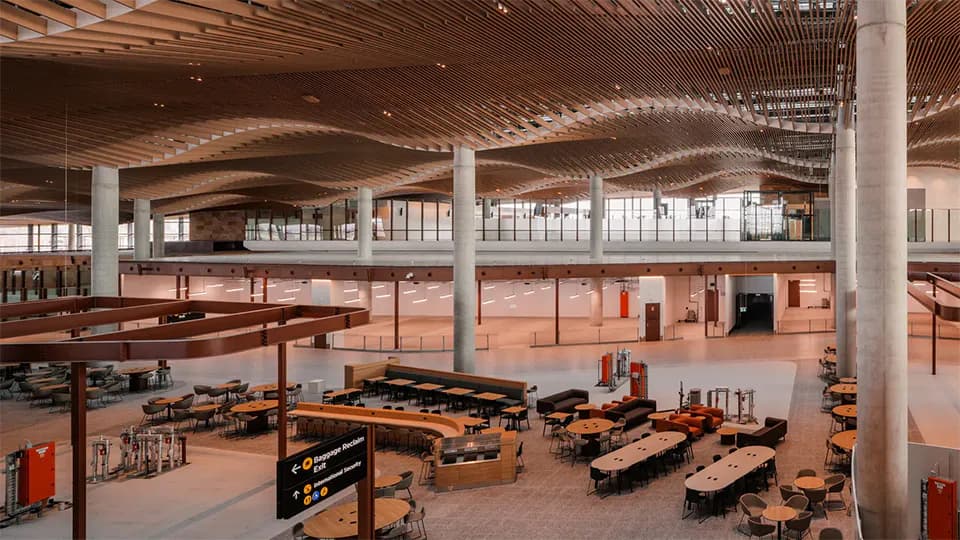
International Airport Corporation. The government is targeting December 16 for
the partial opening of the Third Terminal.
The proposed 15-year
restriction is understood to be among several contentious provisions in the
agreement that have attracted attention during negotiations.
Industry observers
believe that while bringing the long-awaited Third Terminal into operation is
an urgent priority, the government must also ensure that the terms of the
operating agreement do not compromise Bangladesh's future aviation development
prospects.