

Can HSIA Third Terminal transform Bangladesh into regional cargo hub?

Dhaka
: The operationalization of Hazrat Shahjalal International Airport's Third
Terminal presents Bangladesh with a significant opportunity to strengthen its
air cargo infrastructure, improve export competitiveness and establish itself
as a more important player in regional and international supply chains.
While
the new terminal is widely viewed as a major step towards modernizing passenger
services, its cargo facilities could prove equally consequential for the
country's economy. In an increasingly interconnected global marketplace, the
efficiency of an airport's cargo operations directly influences the
competitiveness of exporters, the reliability of supply chains and a country's
attractiveness as a business and investment destination.
For
Bangladesh, whose export economy depends heavily on the ready-made garment
industry and whose international trade includes pharmaceuticals, seafood,
agricultural products and other time-sensitive commodities, efficient air
freight is not merely a logistical convenience. It is an economic necessity.
Capacity
expansion must deliver efficiency
According
to official information cited by Hazrat Shahjalal International Airport, its
existing annual cargo-handling capacity is approximately 200,000 tons, with
plans to increase it to 500,000 tons following expansion.
This
represents a substantial increase in capacity. However, additional warehouse
space alone will not make Dhaka a competitive cargo gateway. The real test will
be whether the expanded facilities can process shipments faster, reduce cargo
dwell time, ensure reliable handling and provide exporters and importers with
predictable service.
Cargo
delays can have serious commercial consequences. Garment exporters may miss
shipment deadlines, pharmaceutical consignments may require specialized
temperature-controlled storage, and perishable products can lose value when
clearance or handling is delayed. Additional paperwork, repeated handling and
inefficient coordination further increase logistics costs.
The
objective, therefore, should be to transform the Third Terminal's cargo
infrastructure into an integrated, technology-driven logistics hub rather than
simply a larger cargo complex.
World-class
cargo village essential
The development of a modern cargo village should be a priority. Import and export operations require appropriately segregated, professionally managed facilities supported by automated handling systems, secure storage, efficient screening and well-organized cargo movement.
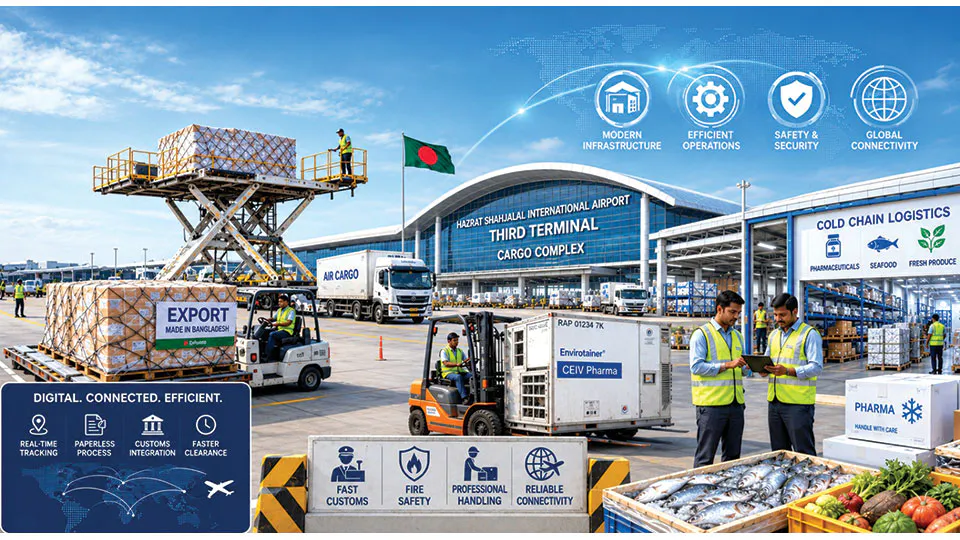
Import
cargo should he dedicated warehousing supported by automated inventory
management, real-time tracking and efficient procedures for customs clearance
and delivery. Export facilities should enable freight forwarders, airlines,
ground handlers and exporters to coordinate acceptance, documentation, security
screening and aircraft loading without unnecessary delays.
Specialized
cargo requires particular attention. Pharmaceu-ticals need dependable
temperature-controlled environments, while seafood, fresh produce and other
perishables require an uninterrupted cold chain. Dangerous goods and valuable
consignments need dedicated storage, appropriate security and handling
procedures, and adequate fire protection.
International
examples offer useful lessons. Delhi Airport has developed extensive on-airport
warehousing, including specialized facilities for pharmaceuticals, perishables,
dangerous goods and valuable cargo. Kolkata's cargo complex also offers
automated import storage, cold-storage facilities and dedicated areas for
hazardous and valuable consignments.
Dhaka
should adopt comparable operational principles, tailored to Bangladesh's trade
profile and future cargo demand.
Cold-chain
logistics can unlock new export opportunities
Bangladesh's
ambitions to diversify its export basket will depend partly on its ability to
transport high-value and time-sensitive products reliably.
An
internationally credible cold-chain system could support the expansion of
pharmaceutical exports, seafood shipments, fresh agricultural produce and other
temperature-sensitive goods. Such infrastructure would help reduce spoilage,
protect product quality and strengthen confidence among international buyers.
The
airport should consider internationally recognized standards, including the
IATA Centre of Excellence for Independent Validators in Pharmaceutical
Logistics (CEIV Pharma) framework, as a benchmark for developing reliable
pharmaceutical handling capabilities.
However,
cold-chain infrastructure must extend beyond refrigerated storage. Temperature
monitoring, trained personnel, specialized handling equipment, controlled
transfer processes and coordinated customs procedures are all necessary to
maintain product integrity throughout the logistics chain.
Faster
customs clearance, digital integration
Cargo
competitiveness depends as much on processing speed as on physical
infrastructure.
The airport should establish measurable service standards for cargo dwell time, customs clearance, security screening, truck waiting time and cargo delivery. Publishing and regularly monitoring these performance indicators would help identify operational bottlenecks and encourage greater accountability among the organizations involved.
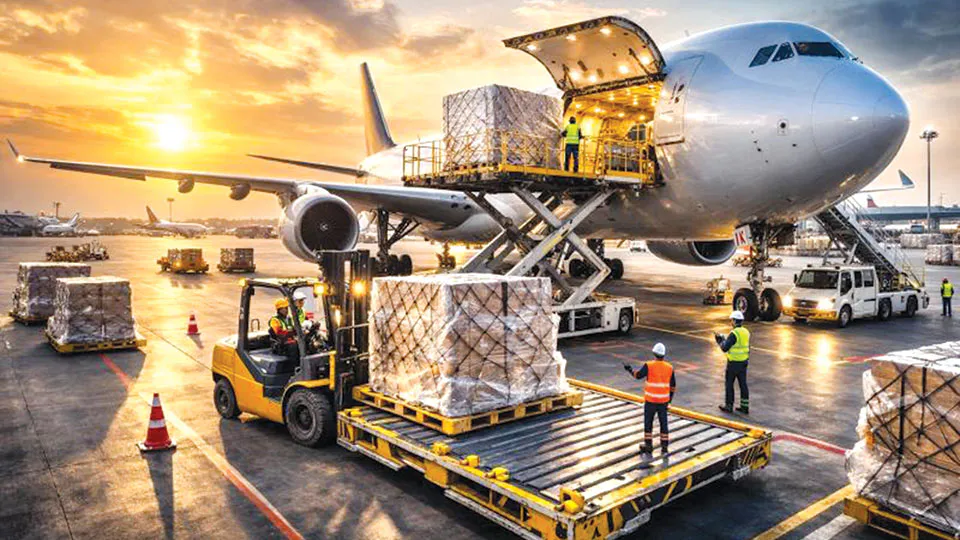
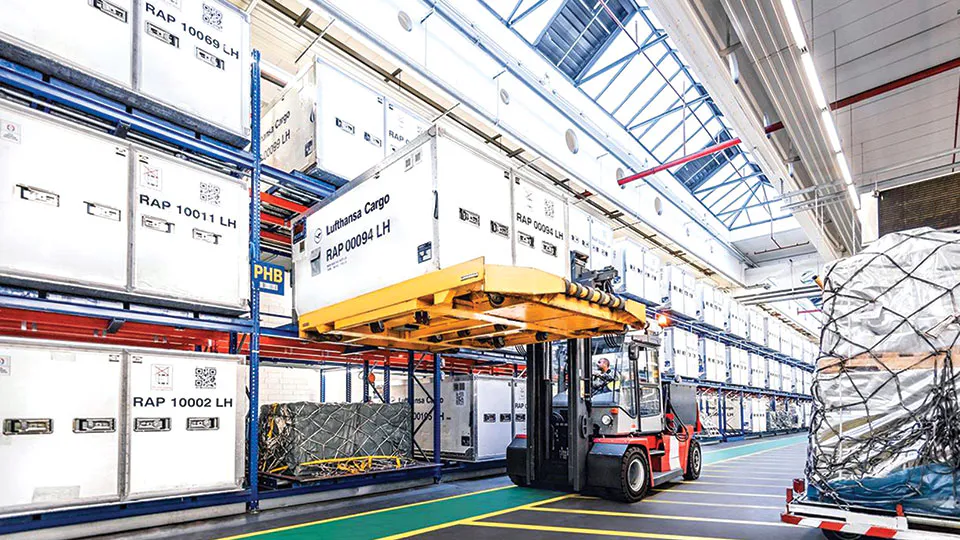 Efficient cargo handling, modern equipment and reliable aircraft connections are essential to make Dhaka a competitive air freight gateway (top and bottom) temperature-controlled logistics can help Bangladesh expand exports of pharmaceuticals, seafood and other sensitive products
Digital
integration is equally important. Exporters and importers should be able to
track consignments from acceptance and screening through customs clearance,
warehouse handling and aircraft loading.
Better
information-sharing among customs, airlines, freight forwarders, ground
handlers and warehouse operators could reduce paperwork, eliminate duplication
and improve operational coordination. Digital documentation, real-time shipment
visibility and efficient inventory management would also help businesses plan
their supply chains more effectively.
Technology,
however, must be supported by robust cybersecurity, reliable systems and clear
procedures for protecting cargo manifests, customs records and commercially
sensitive information.
Ground
handling, truck movement need attention
A
modern cargo terminal cannot operate efficiently without adequate
ground-support equipment and well-planned landside logistics.
Sufficient
unit load device (ULD) tractors and dollies, high loaders and other specialized
equipment must be available to meet peak-hour demand. Proper maintenance,
equipment monitoring and operational backup arrangements are essential to
prevent aircraft loading and unloading delays.
Equally
important is the movement of trucks into, through and out of the cargo complex.
Inadequate parking, poorly designed loading bays and unregulated vehicle
arrivals can create queues that disrupt cargo operations and spill onto
surrounding roads.
Dedicated
truck staging areas, sufficient loading and unloading bays, scheduled entry
arrangements and digital slot management could significantly improve traffic
flow. The objective should be to ensure that cargo vehicles can complete their
airport transactions efficiently without creating congestion around the
terminal.
Fire
safety must be non-negotiable
The
devastating cargo-village fire in October 2025 underlined the importance of
safety in cargo operations. According to the original article, Fire Service
officials reported shortcomings in fire detection and protection systems, while
the subsequent investigation identified an electrical short circuit as the
trigger and highlighted problems associated with cargo accumulation and
operations.
These
lessons must be incorporated into the design and management of the new cargo
infrastructure.
Modern
fire detection and suppression systems, fire-resistant construction,
compartmentalized storage, clear emergency access and appropriate segregation
of dangerous goods should be fundamental requirements. Electrical installations
must be regularly inspected, while warehouse operators should enforce strict
procedures for storage, housekeeping and the handling of hazardous materials.
Regular
joint emergency exercises involving airport authorities, the Fire Service,
customs, airlines, ground handlers and warehouse operators should form part of
routine operations. Safety standards must be monitored continuously rather than
addressed only after an incident.
From
cargo gateway to regional hub
The
Third Terminal creates an opportunity for Bangladesh to strengthen its position
in international air freight. Realizing that opportunity, however, will require
coordinated action beyond the airport itself.
Airlines
must provide competitive cargo capacity and dependable connectivity. Customs
procedures need to be predictable and efficient. Ground handlers and freight
forwarders must meet professional service standards, while airport management
must ensure that infrastructure, technology and equipment keep pace with
demand.
Bangladesh
should also assess how Dhaka can improve its connectivity with major
international cargo markets and develop stronger links with regional
distribution networks. The potential to attract additional transit cargo will
depend on competitive costs, reliable processing, suitable airline connections
and consistent service quality.
A
larger cargo terminal alone will not establish Dhaka as a regional hub. That
ambition requires a comprehensive ecosystem in which infrastructure,
regulation, technology, safety and commercial operations work together.