

Express firms continue expanding focus on air cargo

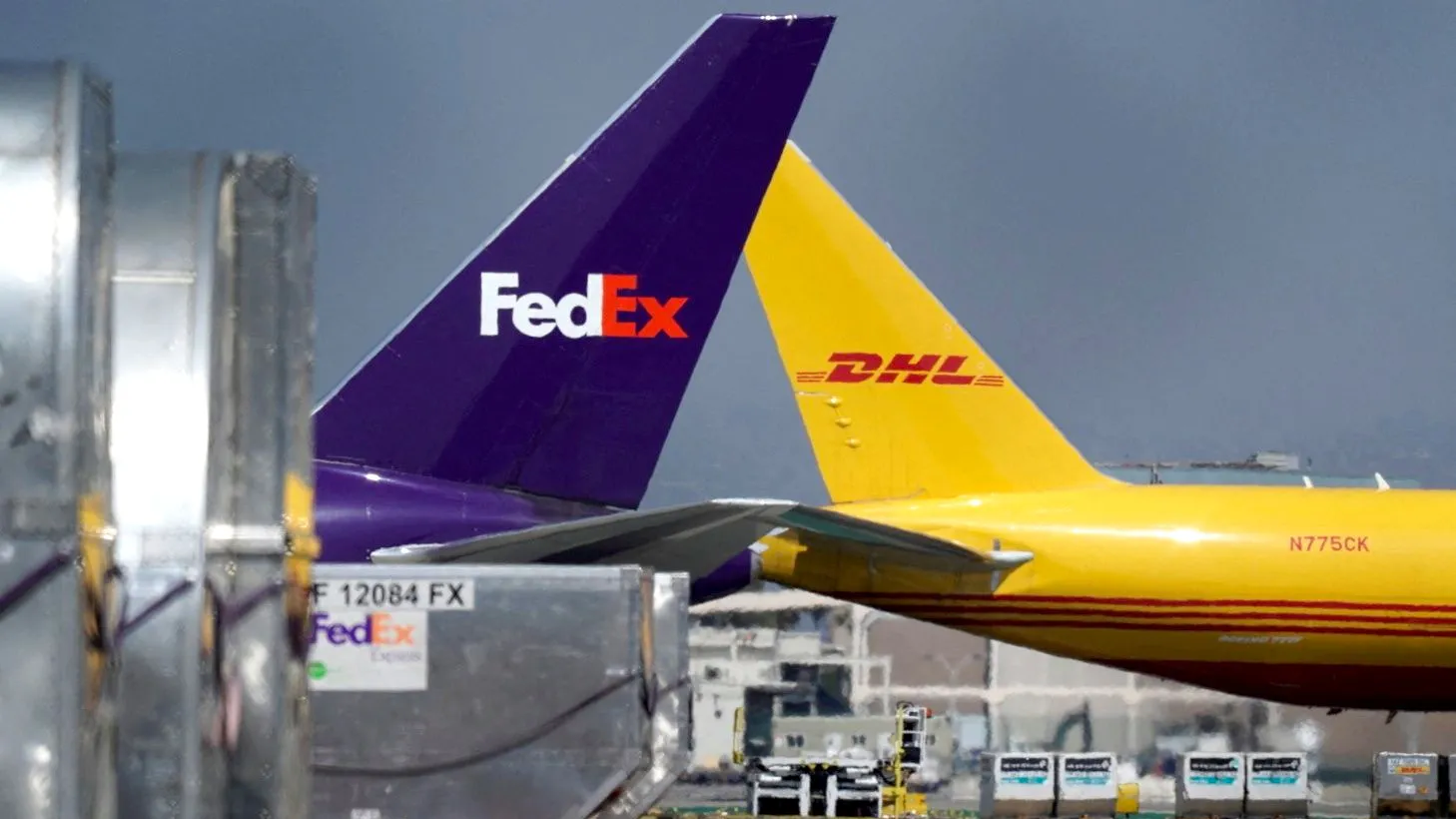
Dhaka: Global express operators are sharpening their focus on air cargo this year, with FedEx and DHL Express reporting stronger airfreight volumes as market conditions favor their integrated networks.
FedEx Chief Executive Raj Subramaniam said in the company's third-quarter results that the carrier had increased its focus on air cargo volumes, which lifted international airfreight daily freight pounds 15% year over year during the quarter.
He also pointed to a 15-fold jump in aircraft engine moves. The company won new airfreight business from an AI data center customer after a relationship of more than 40 years that was largely centered on parcels.
Following the results, FedEx launched a new product for transporting aircraft engines and aerospace components. The airline industry is dealing with rising maintenance demand, extended lead times, parts shortages, and pressure to keep fleets available, the company said.
Last year, FedEx moved a freighter from its express network to its air cargo network. The aircraft targets high-value shipments such as pharmaceuticals and automotive goods.
DHL Express has also moved in this direction. At the start of the year, it introduced its Heavy Weight Express (HWX) service, which carries up to 1,000 kg per piece and 3,000 kg per shipment.
In its third-quarter results, DHL said the Express division handled more airfreight shipments, which added around EUR 100 million to its earnings during the quarter. Daily shipment weight in its Time Definite International business rose 9.7% year on year, partly due to the focus on heavier cargo.
DHL said capacity constraints in the airfreight market drove companies toward express services, accounting for the extra earnings.
Mike Parra, Chief Executive of DHL Express for Europe, said earlier this year that geopolitical unpredictability and supply chain volatility had accelerated the trend. Customers value the speed, certainty, and simple pricing of express, he said.
Parra added that the shift is not necessarily temporary, as customers quickly grow accustomed to the service level and reliability. He said DHL is not trying to take business from its forwarding division, citing urgent needs such as a 300 kg part for a downed oil rig.
Changes in e-commerce are another factor. The removal of de minimis exemptions has pushed online sales platforms toward more traditional supply chain operations, and express operators now handle this sector through their freight business rather than as parcels.
Slower growth in some traditional parcel markets has also allowed operators to use existing freighter capacity for heavier consignments.
Express operators can also offer a more controlled network, predictable transit times, and guaranteed uplift, which conventional airfreight sometimes struggles to match.