

Potential war crime considered when Blue Shield ignored
War threatens Iran's cultural heritage sites

Dhaka : When war approaches historic cities, authorities sometimes respond by raising a quiet but powerful warning: a blue-and-white shield painted or mounted on buildings. In recent weeks, that symbol has appeared on several historic structures across Iran - yet damage to a number of these landmarks suggests the warning may be going unheeded.
The Blue Shield emblem is an internationally recognized sign used to protect cultural heritage during armed conflict. Created under the 1954 Hague Convention for the Protection of Cultural Property in the Event of Armed Conflict, the symbol identifies sites of historical, cultural, or archaeological importance and signals to military forces that they should be spared from attack.
Much like the Red Cross symbol marks hospitals and medical facilities, the Blue Shield indicates places that represent humanity's shared cultural legacy. These can include monuments, historic mosques, museums, palaces, archaeological sites, and ancient settlements.
Under international humanitarian law, parties to a conflict are expected to avoid targeting or damaging such sites. Deliberately attacking cultural property is widely regarded as a war crime, and multiple international agreements commit countries to protecting heritage during military operations.
Despite these protections, growing tensions between Iran and the United States and Israel have raised alarms among heritage experts and international organizations. Since military strikes began on February 28, several historic sites in Iran - including UNESCO World Heritage landmarks - have reportedly suffered damage.
Heritage protection groups say the presence of the Blue Shield emblem should, in theory, reduce the risk to such sites by clearly identifying them as culturally significant. But the realities of modern warfare - including missile strikes, shockwaves and damage from nearby targets - often make safeguarding heritage far more complicated.
The international heritage protection organization Blue Shield International has urged restraint, calling on all sides to respect cultural landmarks and avoid damage during military operations. The group emphasizes that cultural heritage is not simply a collection of old buildings but an essential part of human identity and collective memory.
"Cultural heritage is more than a record of the past," the organization said in a recent statement, stressing that monuments and historic sites help communities maintain a sense of identity and continuity even during times of crisis.
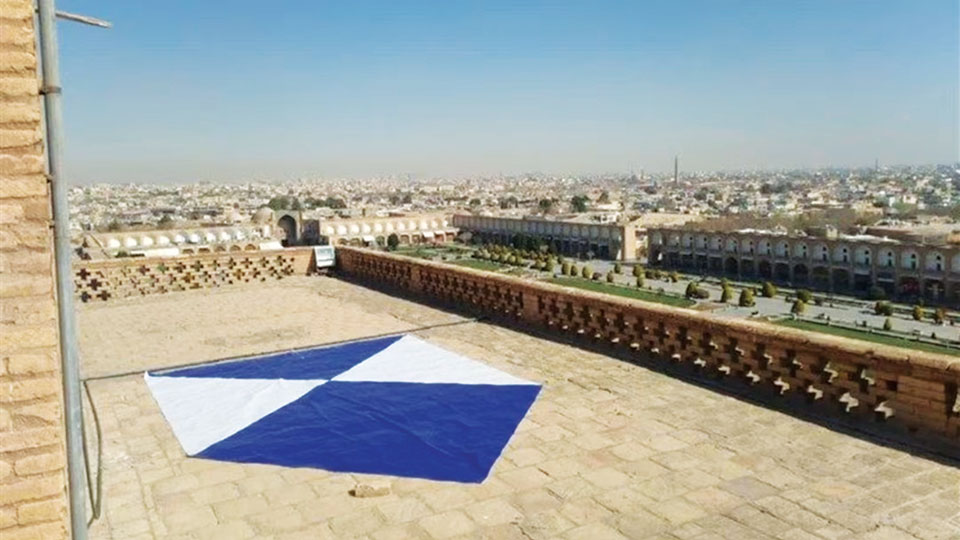
Internationally recognized Blue Shield emblem is used to protect cultural heritage during armed conflict
The United Nations' cultural agency UNESCO has also expressed concern over the situation. The organization says it has shared the precise geographical coordinates of World Heritage sites and other nationally significant landmarks with all parties involved in the conflict in an effort to prevent accidental damage.
Nevertheless, reports indicate that several historic sites have already been affected.
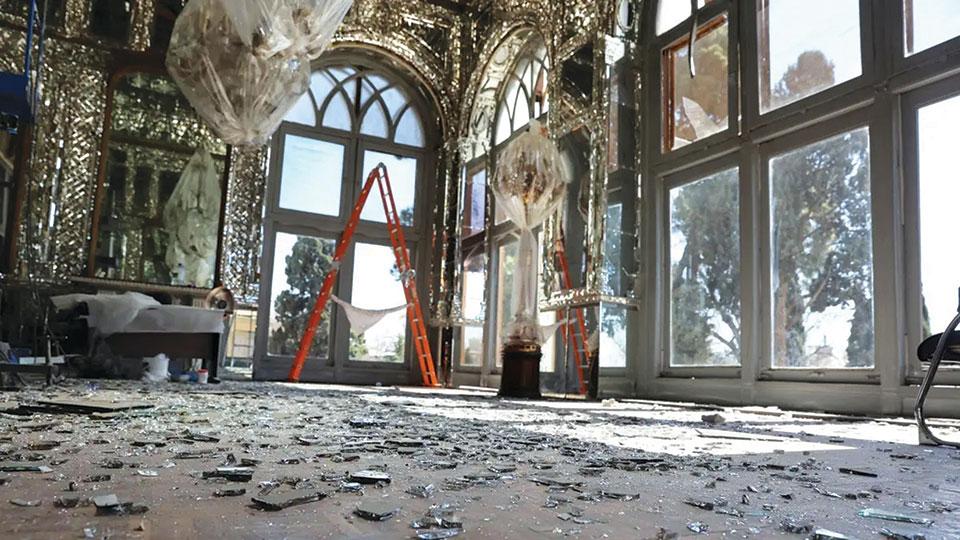
Among them is Golestan Palace in Tehran, the capital's only UNESCO World Heritage property. The palace complex - first constructed in the 16th century and consisting of eight historic buildings - reportedly sustained damage following a missile strike near Arag Square on March 2. Accounts describe shattered mirrored ceilings, broken archways and blown-out windows within parts of the complex.
In the historic city of Isfahan, widely considered one of Iran's most culturally significant urban centers, multiple landmarks have also been impacted.
The Chehel Sotoun Palace, a Safavid-era pavilion built in the 17th century, suffered damage when strikes hit a nearby government building. The palace is famous for its richly decorated frescoes and a large reflecting pool that creates the illusion of "forty columns" - the feature from which it takes its name. Reports indicate cracked frescoes, broken tiles and damaged mirrorwork.
Nearby, the Masjed-e Jame, or the Jameh Mosque of Isfahan, has also been affected. The mosque is one of the oldest Friday mosques in Iran and is considered an architectural chronicle of Islamic design spanning more than twelve centuries. Parts of its structure and decorative tiles were reportedly damaged by shockwaves from nearby explosions.
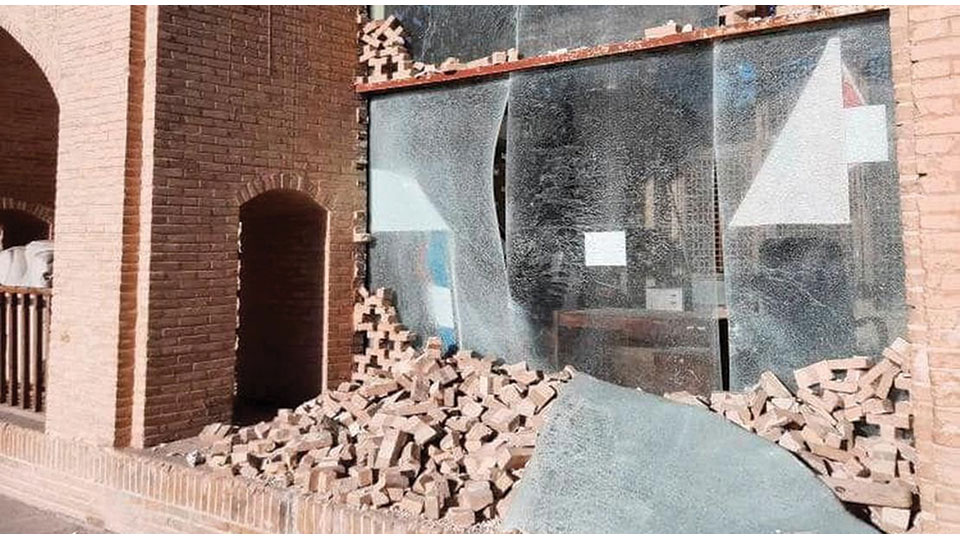
Debris at the Chehel Sotoun Palace in Iran due to airstrikes by US-Israel on March 9
Another major landmark in Isfahan, the Ali Qapu Palace, also sustained damage. Located on the western side of the historic Naqsh-e Jahan Square, the palace once served as a royal gateway to the Safavid court. Broken windows, damaged doors and displaced tilework have been reported following strikes in the surrounding area.
Outside Isfahan, the impact of the conflict has also reached archaeological landscapes.
The Khorramabad Valley in Lorestan Province - an area containing caves and rock shelters with evidence of human habitation dating back approximately 63,000 years - has also experienced damage in nearby buildings due to shockwaves. The valley was added to the UNESCO World Heritage list in 2025 because of its importance in understanding early human history.
Another nearby historic site, the Falak-ol-Aflak Citadel, a massive Sasanian-era fortress built in the early third century, has also been affected. Although the main fortress structure remains standing, explosions reportedly struck several buildings within the complex, including museum facilities. Five heritage staff members were reportedly injured.
Experts note that most of the damage recorded so far appears to have resulted from nearby strikes rather than direct attacks on the monuments themselves. However, they warn that the increasing intensity of conflict could put more heritage sites at risk.
For historians and conservationists, the fear is not only the physical destruction of buildings but the loss of cultural memory. Historic monuments often carry centuries of artistic, architectural and social history - links to civilizations that shaped modern societies.
The appearance of the Blue Shield symbol across Iran's historic sites is therefore both a warning and a plea: a reminder that even during war, humanity's shared heritage deserves protection.
Whether that plea will be fully respected amid escalating conflict remains uncertain.