

Tourism in Bangladesh : untapped jewel with growing promise

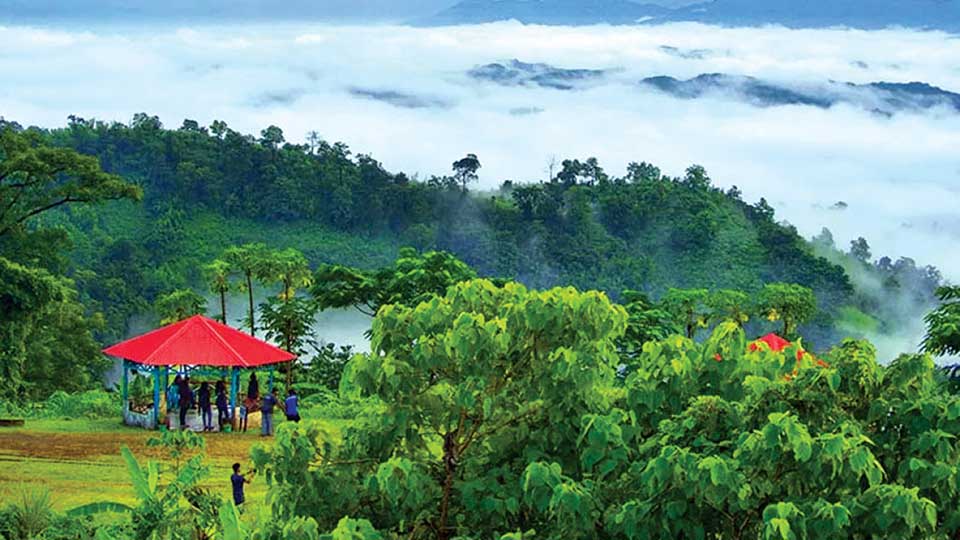
Dhaka : With its mosaic of rivers, lush green hills, rich cultural heritage, and diverse ecosystems, Bangladesh is emerging as one of South Asia's most promising tourism destinations-but still remains largely unexplored on the global stage. Now, driven by government investment, private sector interest, and global curiosity, the country's tourism sector is beginning to show signs of steady growth and resilience.
Natural wonders in every corner
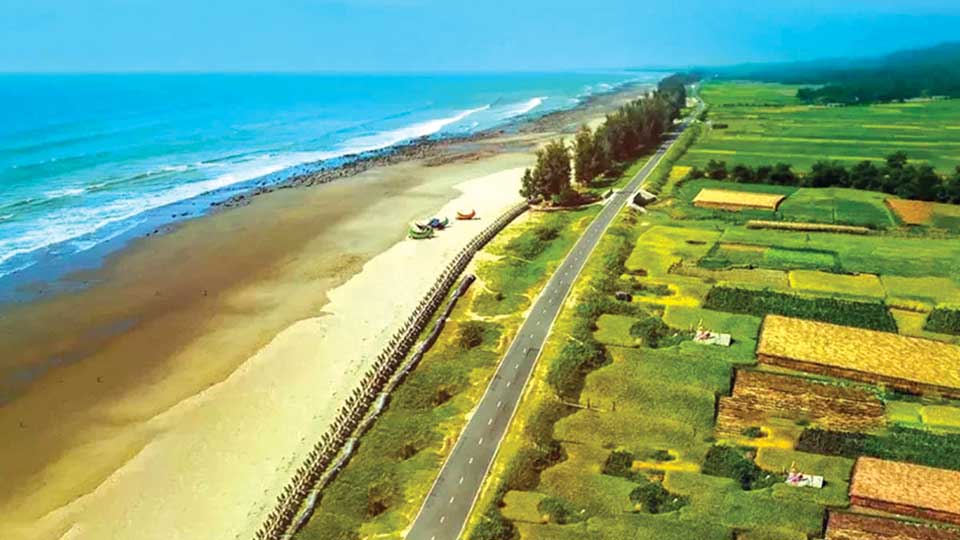
From the world's longest natural sea beach in Cox's Bazar to the mysterious mangrove forests of the Sundarbans, home of the elusive Royal Bengal Tiger, Bangladesh offers breathtaking natural attractions that rival the best in the region. The Chittagong Hill Tracts, dotted with tribal villages and serene lakes, attract eco-tourists and trekkers alike, while the tea estates of Sylhet provide a tranquil retreat among rolling green hills.
For bird watchers and wildlife enthusiasts, wetlands like Tanguar Haor and forest reserves such as Lawachara hold immense ecological and adventure value.
Cultural depth, heritage tourism
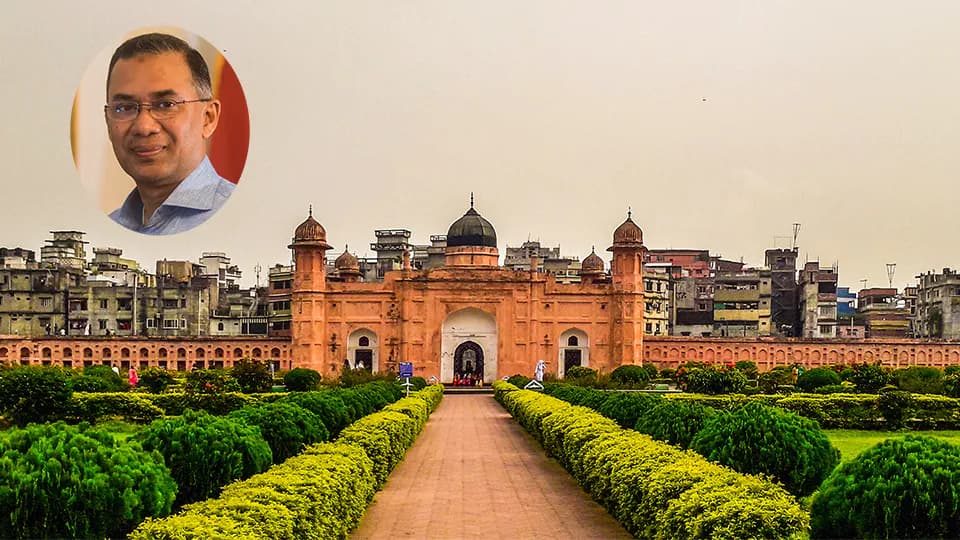
The country boasts an incredibly rich cultural and historical heritage, dating back thousands of years. From the ancient Buddhist monasteries of Paharpur (a UNESCO World Heritage Site) to the medieval mosque city of Bagerhat, and the 18th-century palaces and colonial architecture of cities like Rajshahi and Dhaka, Bangladesh tells a vivid story of civilizational layering.
Religious tourism also holds promise, with sites such as: Kantajew Temple in Dinajpur, the 1,000-year-old Mahasthangarh in Bogura, and various shrines, mosques, and temples that attract domestic and international pilgrims.
Government investment, vision 2041
Under the Ministry of Civil Aviation and Tourism, Bangladesh has set ambitious goals to make tourism a significant contributor to GDP by 2041. Key focus areas include:
(1) Developing tourism infrastructure, especially in Cox's Bazar, Kuakata, Sundarbans, and hill districts;
(2) Improving airport capacity (including HSIA's third terminal and upgrades in regional airports);
(3) Estab-lishing public-private partnerships to build resorts, theme parks, and eco-lodges;
(4) Launching global promotional campaigns under "Visit Bang-1ladesh" branding.
As of FY 2024-25, the government has proposed increased allocations for tourism development projects, including eco-tourism zones, digital tourism services, and training programs for tour operators and guides.
Economic impact, job creation
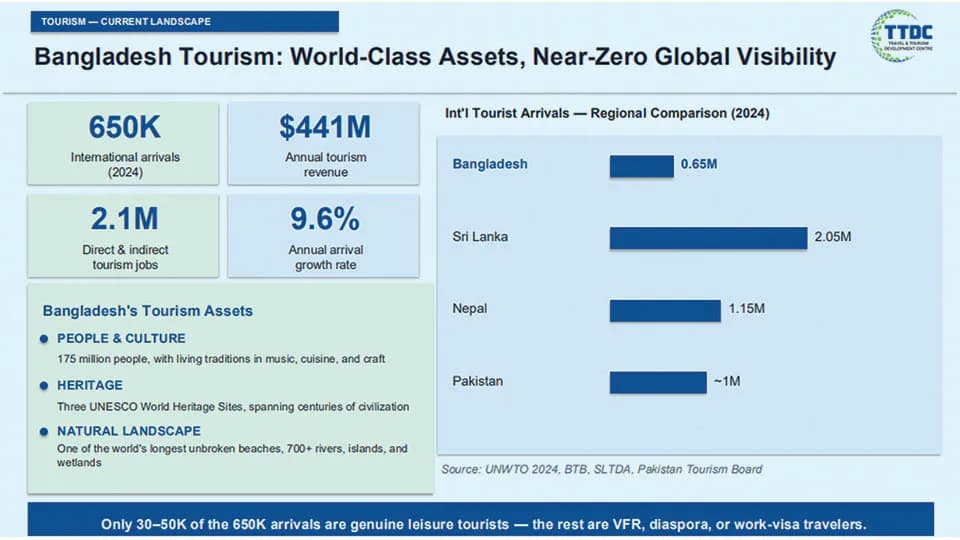
Though tourism contributes only around 3 percent of Bangladesh's GDP, this figure is expected to rise sharply with targeted policy reforms. According to the Bangladesh Parjatan Corporation (BPC), the industry directly and indirectly supports over 2 million jobs, and that number could double by 2030.
Domestic tourism, in particular, has grown substantially in the post-Covid era, with millions traveling within the country during festivals and holidays, fueling local economies in coastal and hill regions.
Challenges ahead
Despite the potential, the sector faces notable challenges:
(1) Lack of sufficient international-standard hotels and facilities in many key destinations;
(2) Inadequate transportation links and infrastructure outside major cities;
(3) Limited global marketing and digital presence;
(4) Environmental concerns tied to unregulated tourism in sensitive ecosystems.
Security, sanitation, and multilingual services also need attention to cater to international tourists.
Regional, religious tourism on rise
Thanks to improved diplomatic ties and regional connectivity, tourism exchanges with Nepal, Bhutan, and Southeast Asia are increasing. Pilgrimage routes for Buddhist, Hindu, and Islamic heritage tours are being mapped, and Bangladesh is part of transnational initiatives like the Buddhist Circuit and Bay of Bengal tourism collaboration.
The introduction of visa-on-arrival, digital e-visa systems, and promotional events abroad are part of efforts to attract more foreign visitors.
Looking ahead: sustainable, inclusive tourism
Bangladesh is now leaning toward sustainable and community-based tourism, with local entrepreneurship, handicrafts, and cultural exchange playing key roles. The focus is shifting from just numbers to experience-driven tourism-where preserving heritage and nature is as important as attracting tourists.
Bangladesh's tourism sector is no longer in the shadows. With strategic investment, improved connectivity, and a rich canvas of natural and cultural wonders, the country has the ingredients to become a hidden gem turned global hotspot. What it needs now is the world to take notice-and the industry to rise to the occasion.