


From bronze to gold ICAO membership
Civil Aviation Academy positioning Bangladesh as regional training hub

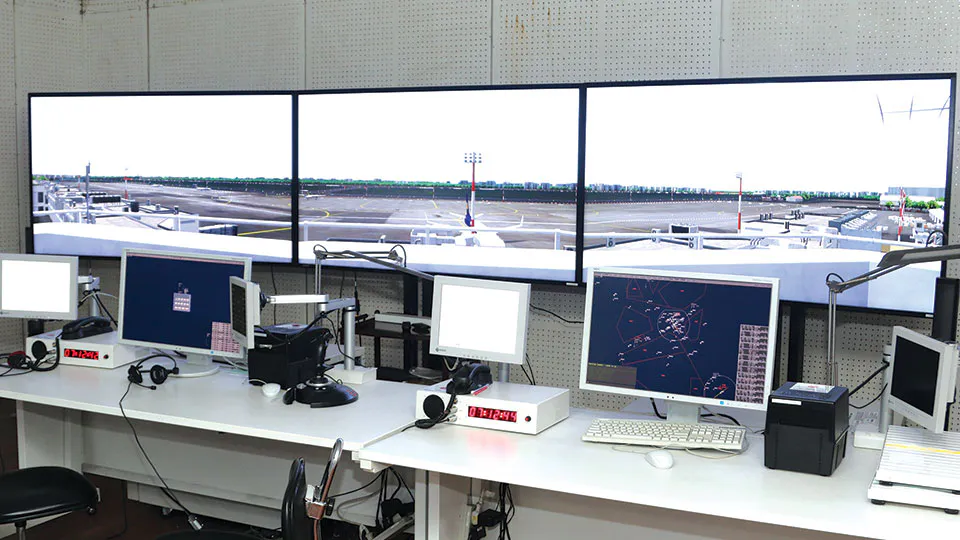
Dhaka
: Bangladesh's aviation training landscape has undergone a quiet but remarkable
transformation over the last four years, with the Civil Aviation Academy of the
Civil Aviation Authority of Bangladesh (CAAB) emerging as one of the
fastest-rising ICAO-recognized training centers in South Asia.
At
the center of this turnaround is its Director Prasanta Kumar Chakraborty, who
said, the academy went from an expired ICAO membership and inadequate
infrastructure to securing ICAO's coveted Gold membership status in 2025 - just
one step below Platinum.
Talking
to The Bangladesh Monitor, Chakraborty described the journey as one of
rebuilding the institution almost from scratch after years of stagnation.
A
lost recognition revived
The
story dates back to 2013, when the International Civil Aviation Organization
(ICAO) made it mandatory for civil aviation training organizations of member
states to obtain ICAO recognition.
Bangladesh's
Civil Aviation Academy initially secured associate membership that year - the
entry-level "Bronze" status under ICAO's TRAINAIR PLUS program.
However, after an ICAO audit identified several shortcomings, the academy
failed to maintain communication and development efforts required for renewal.
"As
a result, the membership expired in 2016," Chakraborty recalled.
At
the time, he was serving in CAAB's Flight Safety Department as Deputy Director.
The academy, he said, saw little progress over the years, with successive
leadership changes and limited institutional focus.
The
turning point came in 2021 when then CAAB Chairman Mafidur Rahman assigned
Chakraborty to take charge of the academy.
"I
joined in August 2021. By December, I contacted ICAO and restarted the
process," he said. What followed was an extensive institutional overhaul.
"There
were no proper training procedure manuals, no quality manuals, insufficient
instructors, poor infrastructure, and even classrooms lacked audiovisual
equipment," he explained.
The
academy subsequently developed nine modern classrooms, introduced standardized
training manuals, and strengthened its instructor base.
In
June 2022, ICAO auditors revisited Bangladesh and reinstated the academy's
associate membership after finding that minimum standards had been met.
Bangladesh
begins
The
revival quickly evolved into something bigger. In 2023, Bangladesh hosted ICAO
training courses for the first time in its history.
Until
then, CAAB's internal training programs followed ICAO annex guidelines but were
not officially ICAO-approved courses developed under ICAO methodology.
Chakraborty
said, the academy first focused on training its own instructors and personnel
before opening programs to international participants.
The
initiative soon attracted aviation professionals from India, Pakistan, Nepal,
Bhutan, Sri Lanka, Maldives, Singapore, Uganda, and Cambodia. "Over the
last three years, we have hosted more than 50 international trainings," he
said.
The
courses were conducted by ICAO instructors, using ICAO-developed materials,
with certificates jointly signed by ICAO and the CAAB Academy.
The
development marked a major leap for Bangla-desh's aviation training ecosystem,
giving local aviation professionals access to internationally recognized
qualifications without travelling abroad.
FAA
partnership adds momentum
The academy's ambitions expanded further in 2024 when it partnered with the United States Federal Aviation Administration (FAA) to host specialized aviation safety training programs.
 Prasanta Kumar Chakraborty
According
to Chakraborty, the FAA selected only two venues in the region for the
initiative- Bangkok and Bangladesh.
The
programs, conducted over three weeks, included three advanced courses costing
between USD 80,000 and USD 100,000 each.
Twelve
participants attended each course, including officials from CAAB and regional
aviation authorities. "For the first time, such FAA-level courses were
held in Bangladesh," Chakraborty noted. The achievement contributed
significantly to the academy's elevation from Bronze to Silver membership under
ICAO in 2024.
Bangladesh
develops its own ICAO courses
The
academy reached another milestone in 2025 by developing two Member ICAO
Training Packages (MITPs) - the first ever from Bangladesh.
MITPs
are specialized aviation training courses developed by member states and
approved by ICAO for global delivery.
"Once
approved, these courses can be delivered in ICAO member states worldwide,"
Chakraborty explained. "Our instructors will deliver them, and revenue
will be shared between ICAO and CAAB."
One
of the two courses is expected to receive ICAO approval by September this year
after an 18-month development process.
The
academy's growing capabilities also led to Chakraborty becoming Bangladesh's
first-ever ICAO-recognized instructor in 2024.
Combined
with the MITP initiative and increasing international participation, these
achievements enabled the academy to secure ICAO Gold membership status in 2025.
"It is currently the second-highest tier. Platinum is the highest, but that requires a much larger infrastructure, including hostels, auditoriums, and significantly more instructors," he said.
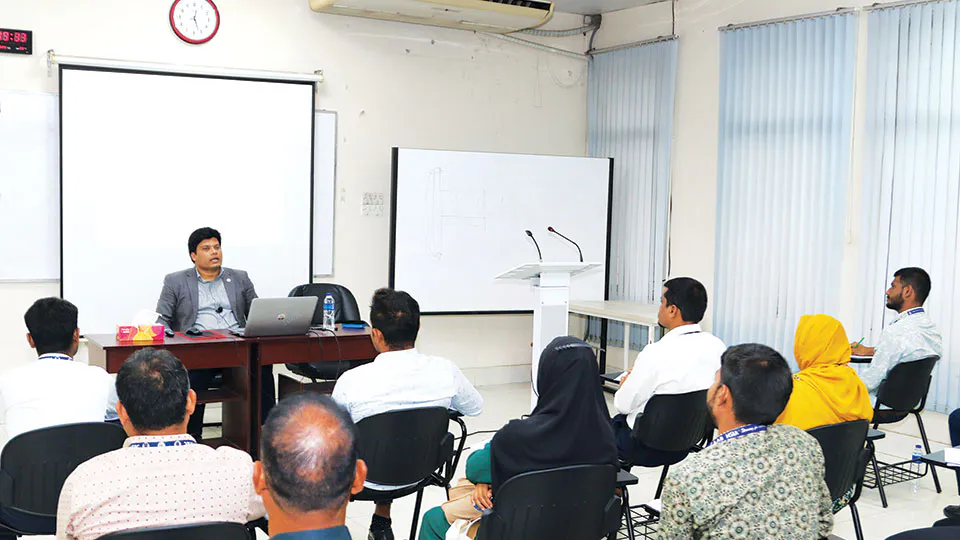 Participants attending a training session at the academy
Building
Bangladesh's aviation human resources
Beyond
prestige, Chakra-borty stressed that the academy's transformation is
fundamentally about strengthening Bangladesh's aviation safety oversight capabilities.
He
pointed to ICAO's eight critical elements of aviation oversight, noting that
human resource development and training form the foundation of effective safety
regulation.
"If
your training and HR capability are not proper, you cannot ensure effective
safety oversight," he observed.
Currently,
the academy conducts around 250 national civil aviation training courses
annually in addition to international programs.
It
also operates a dedicated course development unit that standardizes training
methodologies through ICAO's Instructional Systems Design (ISD) framework.
The
academy expects to have four ICAO-recognized course developers by this year and
potentially six to eight in the near future.
Bangladesh
is also increasing its pool of ICAO-certified instructors across different CAAB
departments, including aviation security and operations.
A
regional opportunity
Chakraborty
believes Bangladesh now has an opportunity to become a regional leader in
aviation training competency development. "Other than Singapore, no
country in the region has moved this aggressively in training capacity
building," he said. "In South Asia, this gap is an opportunity for
Bangladesh. We can fill the gap and lead here."
He
added that if Bangladesh can continue developing instructors, course
developers, and eventually ICAO-recognized course validators, the country could
become a major regional resource for aviation training and safety oversight.
At
present, around 90 percent of trainees at the academy come from CAAB, while the
remaining 10 percent are from airlines and other aviation stakeholders.
Chakraborty
sees strong future potential in expanding industry-focused programs,
particularly aviation security training. "We are building a resource base
for the region," he said. "This is only the beginning."