

IATA revises down air cargo growth forecast for 2026

Dhaka: The International Air Transport Association (IATA) has revised downward its air cargo growth forecast for 2026, citing disruptions stemming from the ongoing Middle East conflict that dominated the first half of the year.
According to IATA's latest financial outlook, cargo volumes are expected to reach 71.7 million tonnes in 2026, reflecting a marginal year-on-year growth of just 0.2%.
This marks a sharp departure from the trade body's earlier projection made at its World Cargo Symposium in March, which had forecast cargo growth stabilizing at 2.6%, measured by cargo tonne kilometers (CTK).
Following the outbreak of the Middle East conflict in March, air cargo demand fell 4.8% year on year. Demand rebounded 4% the following month, though IATA Director General Willie Walsh cautioned that severe disruptions at major Gulf hubs continued to reshape trade routes and constrain capacity on key corridors.
Over the first four months of 2026, cargo volumes are up 3.6% year on year in CTK terms.
Despite the subdued volume outlook, cargo revenue is forecast to reach USD 162 billion in 2026, up 7.2% from USD 151 billion in 2025. IATA attributed the revenue growth primarily to airlines recouping higher costs resulting from the fuel price shock.
Cargo yields are also expected to grow 6.5% this year, ending three consecutive years of decline.
Fuel costs remain a significant concern. The initial closure of the Strait of Hormuz in early March disrupted global jet fuel supply, prompting some airlines to raise fuel surcharges. Overall fuel costs are projected to surge nearly 40%, from USD 252 billion in 2025 to USD 350 billion in 2026.
As a result, overall airline profits are forecast to shrink from USD 45 billion in 2025 to USD 23 billion this year.
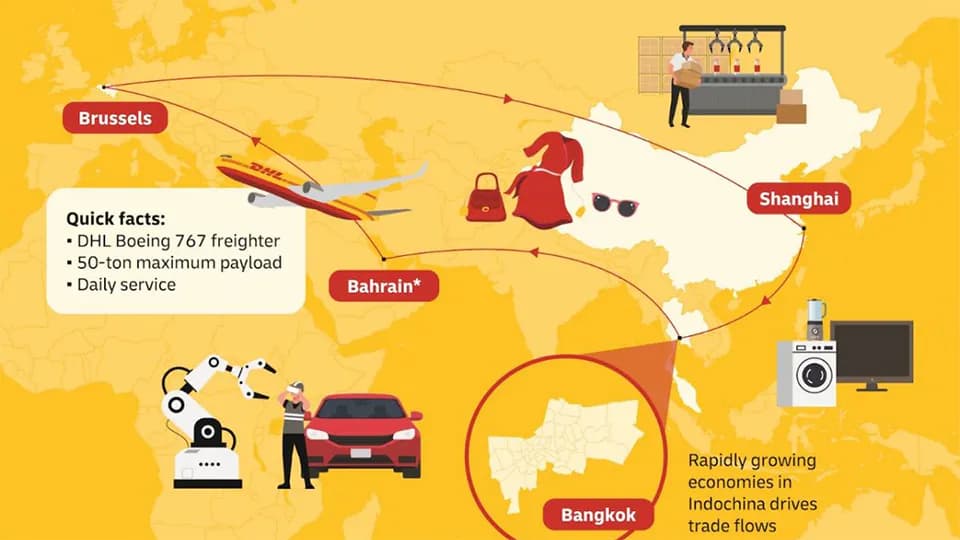
IATA noted the regional cargo outlook remains highly varied. Disruptions at Middle Eastern hubs have created new opportunities for Asia-based carriers, particularly on Europe–Asia trade lanes. However, tighter European customs requirements for low-value shipments could weigh on e-commerce volumes.
Cargo markets in Latin America may soften, especially in export-oriented segments, though structural demand drivers suggest any adjustment will be gradual rather than abrupt.
Middle Eastern cargo markets face added pressure as disruptions have reduced effective capacity and redirected transit cargo toward other regions. IATA said the near-term recovery is likely to be driven more by pricing adjustments than a rapid return of volumes.