

Thailand eyes 160 million passengers by 2034

Dhaka: Airports of Thailand Public Company Limited (AOT) has pledged a sweeping, decade-long expansion plan to raise its total airport capacity to handle more than 160 million passengers annually.
Speaking at a press conference recently, AOT President Paweena Jariyathitipong outlined the company's strategic master plan stretching to 2037, coinciding with the operator's 47th anniversary on July 1.
Paweena said despite global economic uncertainities and geopolitical developments, AOT's six regulated airports handled 552,119 flights, up 1.38 percent year-on-year in the first eight months of fiscal year 2026, running from October 2025 to May 2026, while passenger traffic rose 2.76 percent to 90.98 million.
Under the new strategic master plan, AOT is pursuing a two-pronged strategy to position Thailand as a dominant World-Class Aviation Hub: accelerating terminal expansions across its network while simultaneously modernizing border operations through artificial intelligence and automated systems.
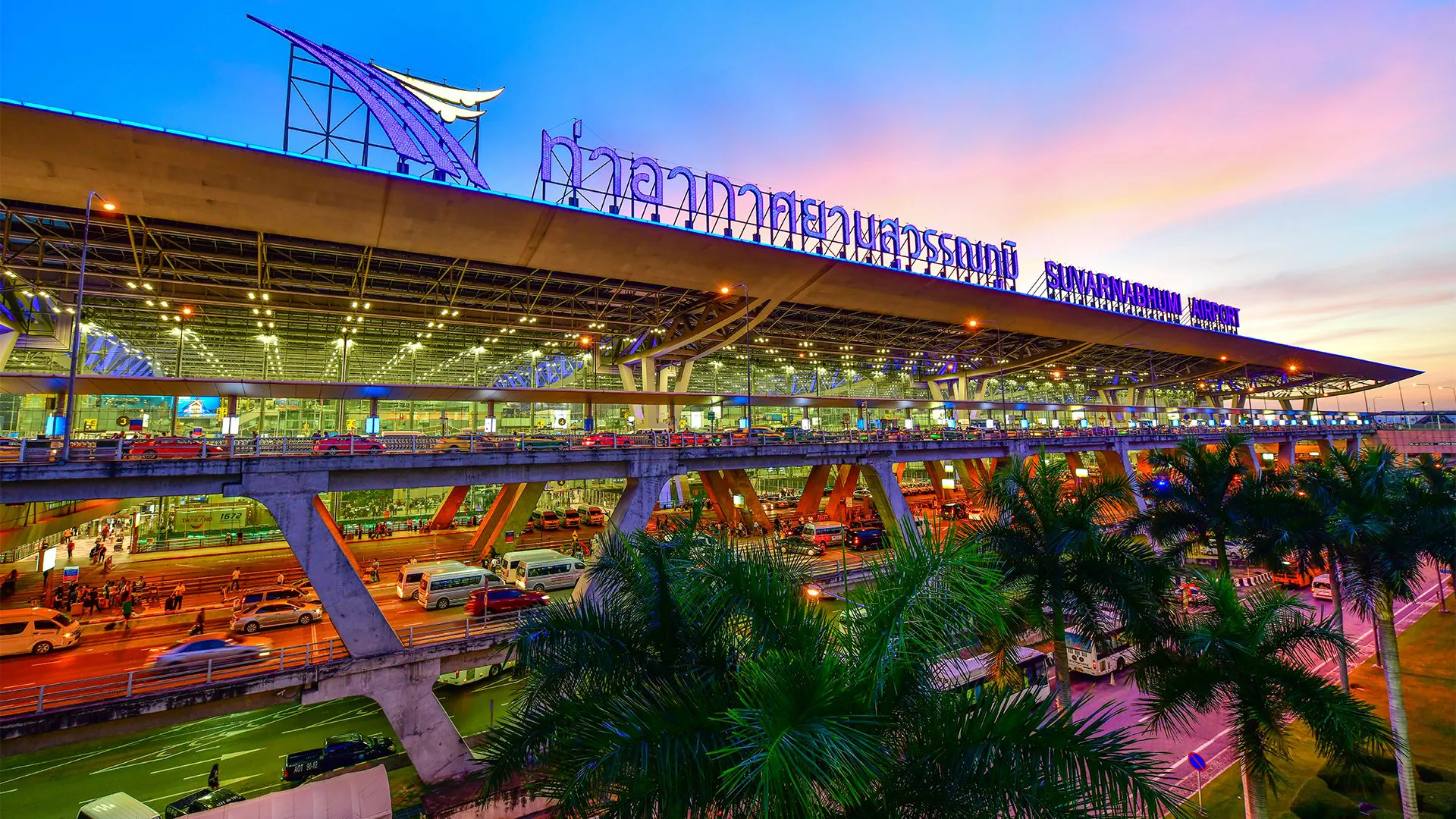
At Suvarnabhumi Airport, the East Expansion project will add 81,000 square meters of space, raising capacity to 70 million passengers by 2031.
Suvarnabhumi's South Terminal Development Project, covering more than 750,000 square meters, is in its design phase, with construction set to begin in 2029 and Phase 1 operational by 2033.
Don Mueang International Airport will get a new Terminal 3, along with modernized Terminals 1 and 2, to improve rail connectivity with Bangkok by 2034. Chiang Mai International Airport will add a new international terminal and dedicate its existing terminal for domestic use by the same year.
Phuket International Airport's international terminal and aircraft contact gates are being expanded, with completion targeted for 2031. Hat Yai International Airport will finalize a master plan and site study by the end of 2026.
On border efficiency, AOT is working with Thailand's Immigration Bureau to install more than 200 Automated Border Control machines at Suvarnabhumi, Don Mueang, and Phuket, including eight assistant lanes for passengers needing extra mobility support, by the end of 2026.
The operator is also rolling out 3D Computed Tomography X-ray baggage screening paired with AI-based prohibited object detection and is evaluating acoustic systems to track and reduce runway wildlife hazards.
All six airports remain under oversight by Thailand's Civil Aviation Authority and the International Civil Aviation Organization to ensure compliance with global safety standards.
To diversify revenue, AOT launched an airline incentive scheme running through October 28, 2028, offering discounts on landing, takeoff, parking, and boarding bridge fees for carriers starting new routes to India, China, and Europe.
The company also plans to partner with private investors to develop land near its airports into hotels, logistics parks, EV charging centers, and recreational facilities to support local employment.
On sustainability, AOT has committed to a net-zero emissions target, including rooftop solar installations on terminal buildings and a full transition to electric vehicles for its own fleet and airport concessionaires.