

Baro Bazar: Neglected site with tourism potential

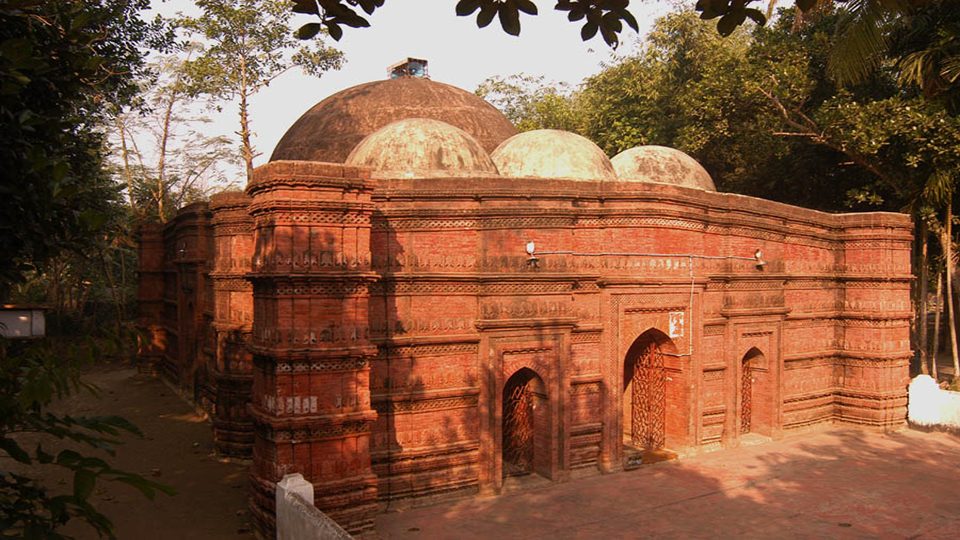
Jashore : Bangladesh is endowed with a plenty of natural and architectural attractions with vast tourism potentials. But due to lack of efforts, many of these attractions are lying unknown and uncared for. Barobazar, an ancient historical place, is one such neglected place.
This place in Jhenidah district is waiting for long to be developed as a tourist attraction in the country.
One of the important historical places in the South-Western Bangladesh, Barobazar is situated on the north bank of the moribund river Bhairab. Under the district of Jhinaidah, the archaeological ruins of Barobazar lie 16 km north of Jashore district town' and 12 km south of Kaliganj Bazar. This area is dotted with many old mounds on either side of the busy Jashore-Jhenidah highway and a rail track running parallel to it.
According to Banglapedia, there are a few traditions about the origin of the name 'Barobazar'. One of them goes that a group of twelve saints headed by Khan Al Azam Ulugh Khan Jahan stayed here for sometimes on his way to Bagerhat. Hence the name of the place is Barobazar.
It is also said that Khan Jahan dug a large number of tanks (dighis) and constructed equal number of mosques on the bank of each tank.
The other tradition narrates that there were twelve prosperous villages or markets (bazars) namely Enaetpur, Abdalpur, Daulaptur, Rahmatpur, Samaspur, Muradgarh, Haibatpur, Nischintapur, Sayedpur, Ganimatpur, Belat and Shahbajpur in this area and hence the name of the locality is Barobazar (Baro- twelve and bazar -market).
It is also reported that this name was derived from the names of twelve saints. But there is no authentic document that the mantioned saints were Ulugh Khan Jahan's associates or followers. But at present Barobazar represents a flourishing business centre.
However, the name 'Moshjider Polli', or 'The village of Mosques', is currently the most popular among the local residents.
The Khulna unit of the government's archaeology department has been excavating the Barabazar spot since 1993. Some 15 archeological sites, covering a total area of 3.0 kilometres with several mosques, have been discovered on the western side of the rail line at Barobazar. The archaeology department has named the place as 'Muhammadabad City'.
The notable sites there include Satgachia Mosque, Gopher Mound Cemetery, Namazgah Cemetery, Gola-kata Mosque, Jorbangla Mos-que, Manohar Mosque, Gorar Mosque, Pir Pukur Mosque, Shukur Mallick Mosque, Nun-gola Mosque, Khorer Dighi Cemetery, Pat-hager Mosque and Badedihi Cemetery.
According to the historic annals available with the archaeology department, the area was built up in the 15th century. A stone plaque, which was found in 1993 while excavating Jorbangla mosque, confirmed it. The inscription says: 'Shah Sultan Mahmood Ibn Pusain 800 Hijri'. This implies that the monuments are at least 700 years old.
Unfortunately, however, these glories of the Sultanate period in Jhenidah truly lie undisclosed among tourists, due in part to inadequate publicity and lack of other related tourism facilities.
For long, local people are demanding that the authorities take effective steps to beautify and establish facilities around the mosques so that tourists from home and abroad can enjoy these historical sites.
They strongly believe that, these archaeological sites, enriched with structures of great antiquity, will open up unbounded scope for people to acquire knowledge about the region's history and tradition.
At the same time both local people and the government will benefit financially from tourism and sightseeing in the area.