

Govt charts ambitious aviation, tourism roadmap after first 100 days


Dhaka
: The government's first 100 days in office have been marked by an ambitious
reform agenda for Bangladesh's civil aviation and tourism sectors, with
authorities targeting the opening of Hazrat Shahjalal Interna-tional Airport's
long-awaited Third Terminal by Decem-ber 2026, launching international
operations from Cox's Bazar Airport by September 2026, expanding Biman
Bangladesh Airlines' fleet, and pursuing widespread structural reforms aimed at
improving transparency and competitiveness.
Talking
to The Bangladesh Monitor in an exclusive interview, State Minister for Civil
Aviation and Tourism M Rashiduzzaman Millat outlined a broad roadmap that spans
aviation infrastructure, airline expansion, airport development, tourism
promotion, and public-private partnerships.
"We
started with reforming the organizations," the State Minister said, noting
that institutional restructuring became the government's immediate priority
after assuming office.
According
to him, a new Board of Directors has already been formed at Biman Bangladesh
Airlines, followed by the appointment of experienced professionals to key
management positions.
One
of the government's biggest announcements is the signing of a contract to
acquire 14 Boeing aircraft, which Millat described as essential for Biman's
long-term growth.
"Biman's
fleet is very small. There are many promising destinations where we cannot
operate because of aircraft shortages. With these new aircraft, Biman will be
able to expand," he said.
Until the new aircraft are delivered, the airline is also evaluating lease offers while simultaneously recruiting cadet pilots to address an anticipated shortage of flight crew. The government is also revising pilots' salary structures to improve recruitment and retention.
Third
Terminal back on track
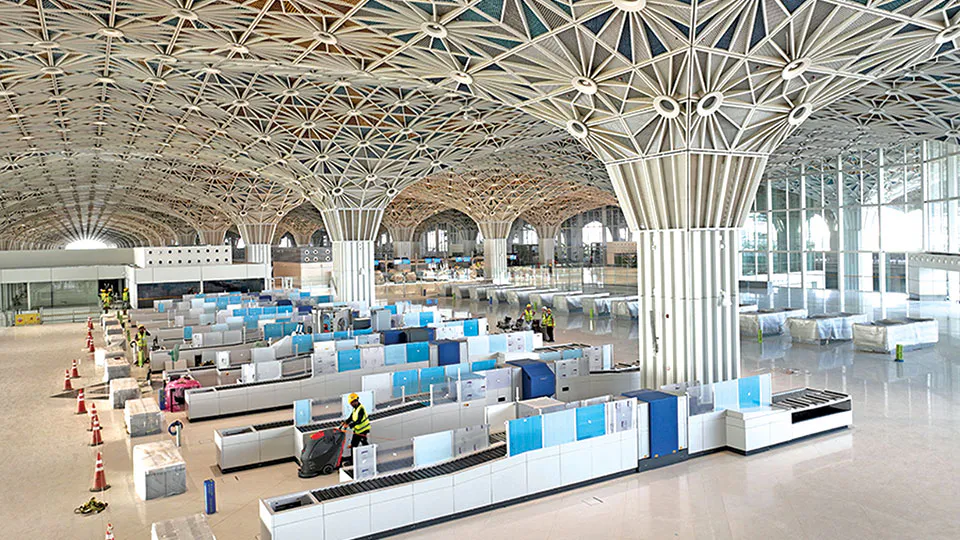
Perhaps
the most significant development concerns Dhaka airport's Third Terminal, whose
operational readiness had stalled following the cancellation of the operator
selection process.
Millat
said, the government restarted negotiations with the Japanese consortium
responsible for the project after extensive diplomatic enga-gement involving
both the Japanese Ambassador and Japan's Civil Aviation Minister.
According
to the State Minister, Bangladesh successfully renegotiated the revenue-sharing
arrangement from an initial 15 percent offered by Japan to 27 percent.
Following
the expected signing of the agreement in July, Japan will begin the Operational
Readiness and Airport Transfer (ORAT) process, which is expected to take
approximately three months.
"If
everything proceeds as planned, we expect at least a soft opening of the Third
Terminal by December," he said.
Cox's
Bazar set for int'l operations
The
government is also preparing to make Cox's Bazar Airport Bangladesh's next
international gateway.
Millat
said, installation of equipment, furniture, and airport systems has largely
been completed, with only systems integration remaining.
"We
are aiming to start international operations by September," he said.
Beyond
Cox's Bazar, the ministry is evaluating several other airports for
international services while planning to reopen a number of dormant airports.
Bogura
Airport is being considered for dual runways and eventual international
operations alongside the development of a cargo hub, while Ishwardi and
Shamshernagar are also under active consideration.
Millat
noted that reopening Ishwardi Airport would support the nearby Rooppur Nuclear
Power Plant by facilitating travel for foreign specialists as well as cargo
movements, while also benefiting the wider Pabna region.
Push
for transparency, competition
Transparency
remains a central pillar of the government's aviation agenda, according to the
State Minister.
Aircraft
leasing decisions will be guided by international aviation consultants
appointed through open tenders, rather than internal decision-making.
"We
are not technical experts. We want experienced consultants to guide us, and
every process will be transparent," he said.
The
ministry is also attempting to dismantle monopolies in several aviation service
sectors, including General Sales Agents (GSAs), ground handling, and cargo
handling at Dhaka Airport.
Rather
than allowing a single operator to dominate these services, the government
intends to introduce multiple qualified players to improve efficiency and
service quality.
To
improve passenger handling, the government is considering forming a consortium
between Biman and an internationally reputed ground handling company.
Several
global operators, including Menzies, Çelebi and firms from Switzerland, Türkiye
and the United Arab Emirates, have already expressed interest, Millat said.
Category
1 target, New York ambition
Another
major objective is upgrading Bangladesh from Category 2 to Category 1 under the
US Federal Aviation Administration's International Aviation Safety Assessment
program.
Millat
said, the Civil Aviation Authority of Bangladesh (CAAB) is working to complete
all required improvements before the next international audit.
Achieving
Category 1 status would pave the way for direct flights between Dhaka and the
United States, including the possible resumption of Biman's New York service.
Meanwhile,
CAAB has recorded more than BDT 200 crore in revenue during the past three
months, aided by the commissioning of a new Thales radar system covering up to
200 nautical miles, extending surveillance to Bangladesh's maritime boundary in
the Bay of Bengal.
The
radar now enables Bangladesh to collect overflight charges from aircraft using
its airspace more effectively, contributing significantly to recent revenue
growth.
Tourism
gets renewed focus
The
government is also pursuing reforms across the tourism sector.
Loss-making
properties of Bangladesh Parjatan Corporation, including Hotel Shaibal and
Motel Probal in Cox's Bazar, are being prepared for operation under
Public-Private Partnership (PPP) arrangements.
The
ministry is also in discussions with China regarding the development of Cox's
Bazar beach to international standards.
Planned
improvements include public shower facilities, changing rooms and upgraded
beach infrastructure to improve the visitor experience.
The
government is simultaneously seeking to strengthen the Tourist Police.
Although
Bangladesh has around 1,400 tourist destinations, Millat acknowledged that the
existing tourist police force remains inadequate.
The
ministry is working with the Home Ministry to increase personnel deployment at
tourist destinations nationwide.
Fleet
expansion for future growth
Looking
further ahead, the government envisions a significantly larger national
carrier.
Alongside
Boeing purchases, discussions are also underway with Airbus regarding leased
aircraft as part of plans to establish a mixed fleet.
Millat
said, passenger demand through Dhaka airport is expected to rise sharply after
the Third Terminal becomes operational, increasing annual passenger throughput
from around 12 million currently to between 25 million and 30 million.
To
meet future demand, particularly on Middle Eastern routes, the government
estimates Biman will eventually require a fleet of approximately 47 aircraft.
The
airline also plans to expand services to Tokyo.
Currently
operating one weekly flight due to aircraft shortages, Biman hopes to increase
frequencies to three-weekly once leased aircraft become available, serving
Bangladesh's sizeable expatriate community in Japan as well as growing tourism,
education and business travel demand.
Summing
up the government's approach, Millat said the administration aims to build
profitable, transparent, and globally competitive aviation and tourism
institutions capable of supporting Bangladesh's long-term economic growth.
"We
want to work for the country, not for ourselves."