

ICMPD, BRAC join hands to strengthen safe migration to Europe

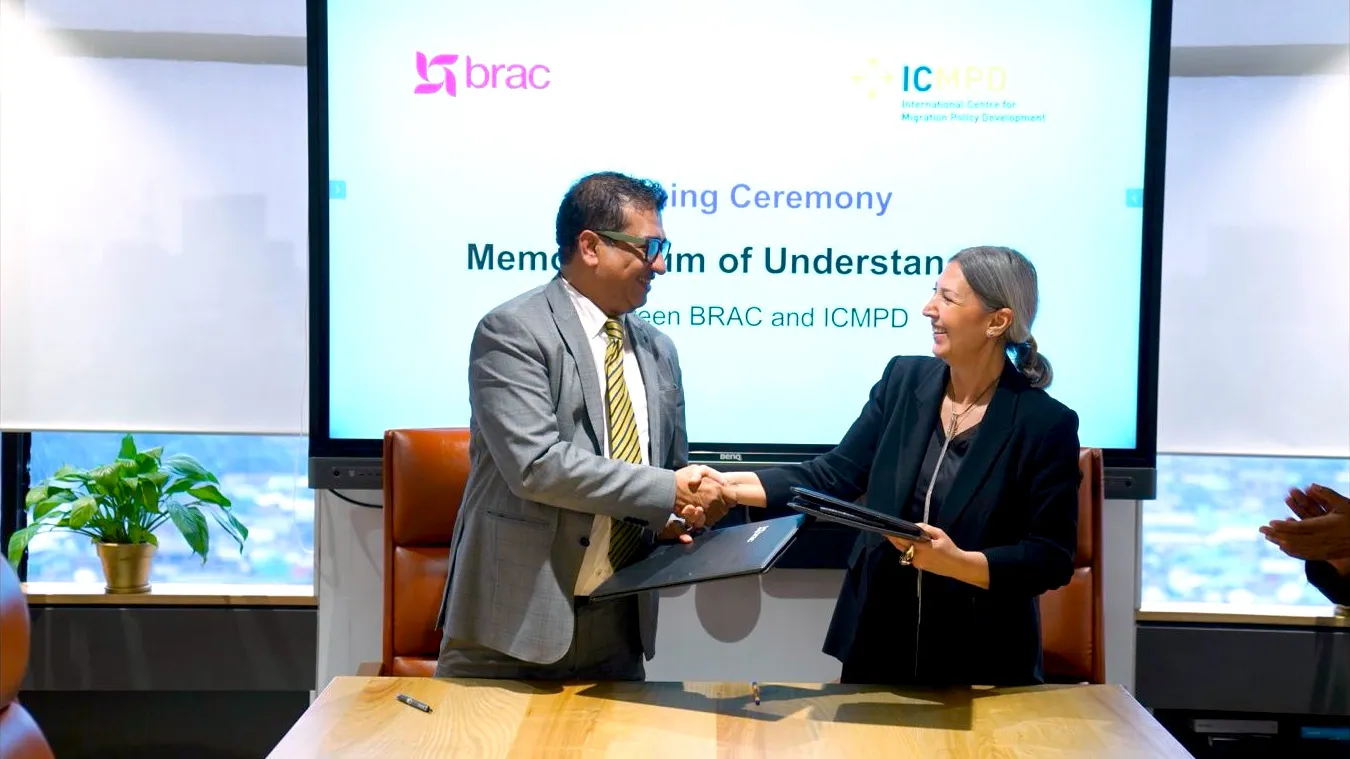
Dhaka: The International Centre for Migration Policy Development (ICMPD) and BRAC have joined hands to strengthen migration governance, promote safe and legal labor migration, and support the sustainable reintegration of returning migrants in Bangladesh.
The partnership was formalized through a memorandum of understanding (MoU) signed at the BRAC Centre in the capital on June 30 by Sedef Dearing, ICMPD's Deputy Director General and Director of Migration Dialogues and Cooperation, and Arinjoy Dhar, Officer-in-Charge and Senior Director of BRAC, read a press release.
Speaking at the signing ceremony, Dearing said the partnership would help reduce irregular migration from Bangladesh while narrowing the gap between the European labor market's demand for skilled workers and the supply of skilled workers from Bangladesh.
"While migration plays a vital role in Bangladesh's socio-economic development, significant challenges remain in tackling irregular migration, strengthening integrated border management, preparing skilled workers to meet labor market demands, facilitating legal migration pathways, and ensuring the protection of migrants," she said.
She added that addressing these challenges requires coordinated national and international efforts and that ICMPD's partnership with BRAC would strengthen ongoing initiatives to improve migration governance.
Arinjoy Dhar said BRAC has long been working to promote safe migration, support the sustainable reintegration of returnee migrants, and combat human trafficking and migrant smuggling.
He said the collaboration would combine ICMPD's international expertise in migration policy and governance with BRAC's extensive grassroots experience to develop more effective and people-centered migration initiatives.
Under the agreement, the two organizations will collaborate on migration management with a focus on skilled labor mobility, return and reintegration, preventing irregular migration, promoting evidence-based public understanding of migration, strengthening diaspora engagement, and addressing emerging migration challenges, including those linked to climate change.
The partnership will also cover policy dialogue, research, training, knowledge sharing, and stakeholder engagement to support more effective and people-centered migration governance.