

Middle East disruptions, fuel costs slash airline profits

Rio De Janeiro : The International Air
Transport Association (IATA) has sharply downgraded its outlook for the global
airline industry, forecasting that profits will be cut by nearly half in 2026
due to Middle East conflict-related disruptions and soaring fuel prices.
According to IATA, global airlines are expected
to post a combined net profit of USD 23 billion in 2026, down from an estimated
USD 45 billion in 2025.
Net profit margins are forecast to fall to 2.0
percent from 4.2 percent a year earlier, while profit per passenger is expected
to decline to USD 4.50.
Despite the weaker profitability outlook,
industry revenues are projected to rise 9.4 percent to USD 1.17 trillion.
This will be supported by growing passenger
demand, higher fares, and stronger ancillary revenues, said the International
Air Transport Association.
Passenger numbers are expected to reach 5.1
billion, with load factors hitting a record 84 percent.
IATA attributed the downturn primarily to a
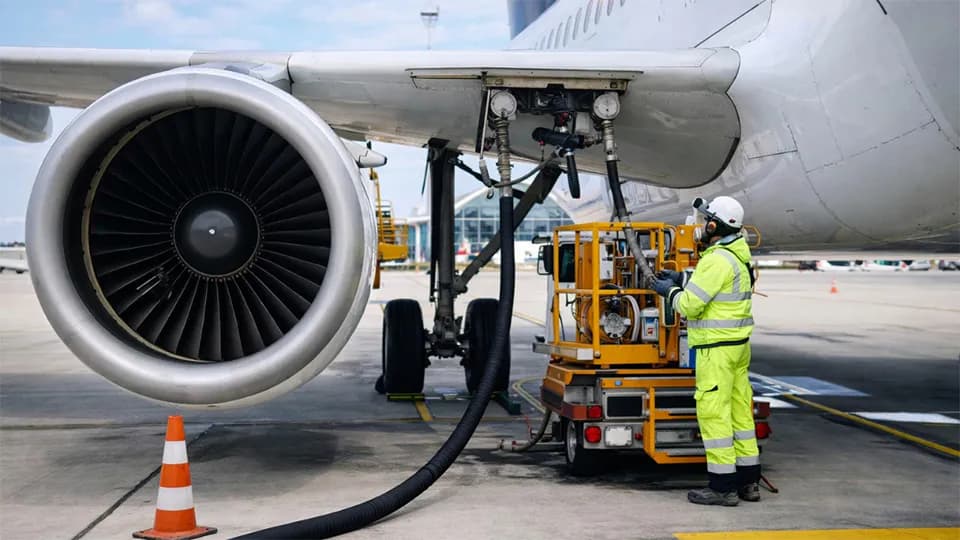
nearly 70 percent increase in jet fuel prices, which are expected to average
USD 152 per barrel in 2026.
Total airline fuel costs are forecast to jump
to USD 350 billion, up from USD 252 billion in 2025.
The Middle East is expected to be the only
region reporting a collective loss, with airlines forecast to post a net loss
of USD 4.3 billion amid airspace restrictions, flight cancellations, and
reduced transfer traffic.
Other regions are expected to remain
profitable, although at lower levels than previously anticipated.
IATA said, the industry remains resilient
despite ongoing challenges, including supply chain constraints, aircraft
shortages, inflationary pressures, and geopolitical uncertainty.
The International Air Transport Association is
the global trade association for the world’s airlines.
It represents over 370 airlines that account
for approximately 85 percent of the total global air traffic. It represents and
serves airlines with advocacy and global standards