

Air Astra eyes 2027 launch for int'l flights to Singapore, Kuala Lumpur


Dhaka
: Air Astra, Bangladesh's youngest private carrier, is preparing to launch
international operations by April or May 2027, targeting Singapore and Kuala
Lumpur as its first two overseas destinations.
Imran
Asif, Chief Executive Officer of Air Astra, shared the airline's international
expansion roadmap, fleet plans, and views on the domestic aviation market in an
exclusive interview with The Bangla-desh Monitor.
Fleet
expansion underway
Asif
said the airline received approval from the Civil Aviation Authority of
Bangladesh roughly two years ago, but aircraft availability in the global
market delayed the rollout.
The
airline has signed a letter of intent for one Boeing 737-800, scheduled for
delivery in April, and is negotiating for three to four additional Boeing 737-8
MAX aircraft.
Air Astra plans to add four to five Boeing 737 aircraft during 2027, after an earlier request for proposals for Airbus A320 and A320neo family jets failed to draw a suitable response.
 Imran Asif
Stricter
Bangladeshi rules, which lowered the permitted aircraft age from 20 to 15 years
by the end of 2021, had also limited the pool of eligible used aircraft, he
explained.
Singapore,
Kuala Lumpur first
It
remains undecided which of the two cities will be served first, as slot
allocation and regulatory arrangements are still being finalized, Asif said.
He
noted more than 80 percent of Bangladesh's international air travelers are
Bangladeshi nationals, meaning competition exists on virtually every route
worth operating.
Longer-haul
plans on hold, for now
Air
Astra holds approvals for around 10 to 11 international destinations, including
Sharjah, Abu Dhabi, Doha, and Muscat, but layover routes require larger,
trained crew pools.
Asif
said building that crew capacity takes time, since existing ATR crews would
need to transition to the 737 fleet gradually, without weakening domestic
operations.
Non-layover
routes such as Kuala Lumpur and Singapore are logistically simpler, he said,
making them a natural starting point ahead of longer-haul Middle Eastern
destinations.
Shared
resources with
Despite
operating under separate Air Operator Certificates, Air Astra and US-Bangla
Airlines collaborate closely in select areas, Asif said, particularly crew
training and fleet management.
He
noted Bangladesh has a limited pool of experienced aviation trainers, making
shared resources between the two sister carriers a practical advantage.
Engineering planning and quality assurance are handled separately by each airline, but physical maintenance work for Air Astra is carried out by US-Bangla under existing regulations, Asif said.
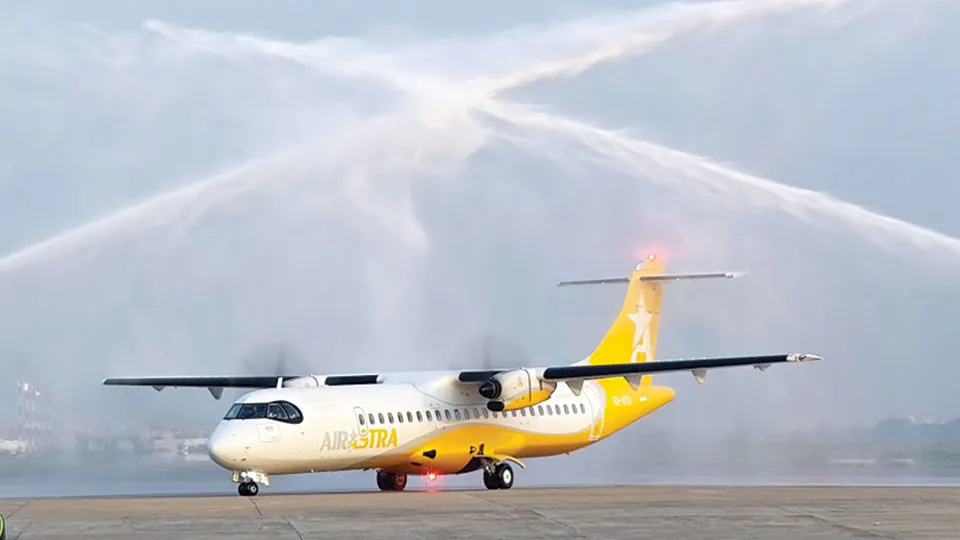
This
arrangement allows Air Astra to grow independently while benefiting from
resources already available within the group, he added.
Low-cost
model not viable in Bangladesh
Asif
dismissed the idea of Air Astra or its sister carrier, US-Bangla Airlines,
becoming a dedicated budget carrier, citing Bangladesh's lack of
low-cost-focused airport infrastructure.
He
pointed to AirAsia's dedicated terminal in Kuala Lumpur as an example of the
volume-driven infrastructure required, which Dhaka currently lacks.
Instead,
Air Astra will remain a full-service carrier and is weighing whether to
reconfigure its incoming aircraft with dual-class cabins or improved
single-class seating.
Jashore,
Barishal not on the cards
The
opening of the Padma Bridge has reduced air-travel demand to Jashore and
Barishal, Asif said, as road transport has become a stronger alternative for
many travelers.
Asked
if smaller turboprops like the ATR 42 could keep these routes profitable, he
said they offer limited cost savings over the ATR 72 despite a significant
capacity cut, making them unattractive for most destinations.
Air
Astra could reconsider small-aircraft operations if the government activates
neglected airfields such as Bogura, Ishwardi, Shamshernagar, and Lalmonirhat,
Asif said.
Fuel
access limits intercity routes
Expanding
intercity connections bypassing Dhaka remains constrained by fuel availability,
with only Sylhet, Dhaka, Chattogram, and Cox's Bazar currently well supplied,
Asif said.
He
suggested Bangladesh consider a subsidy scheme similar to India's UDAN program,
which supports air connectivity to smaller cities through fare guarantees and
charge waivers.
No
plans for wide-body jets
Asif
also denied recent reports that Air Astra was considering Boeing 777 aircraft,
saying references to the Boeing 737 had likely been misinterpreted.
Wide-body
operations remain a longer-term prospect reserved for US-Bangla Airlines, he
said, as Air Astra continues building its operational experience and fleet
maturity.