

Four Nilgai calves born in Gazipur Safari Park

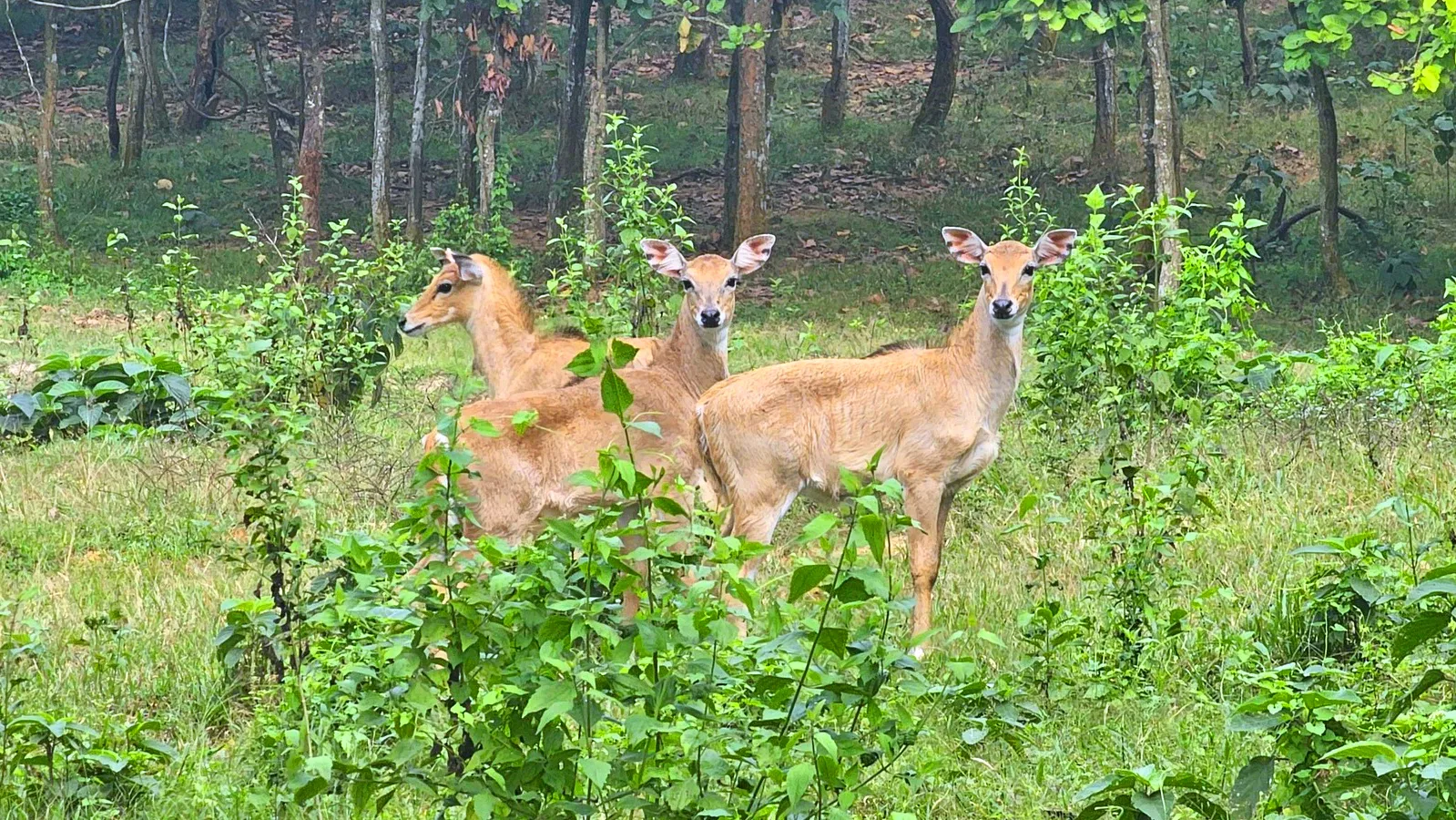
Dhaka: Four Nilgai calves have been born at Gazipur Safari Park, raising the park's total population of Asia's largest antelope species to 13, according to local media reports published recently.
Staff members first spotted the newborns about a month ago in the deer enclosure of the core safari area, where they were born. Authorities withheld the news until now to ensure the animals’ safety and proper care.
The calves are reportedly in excellent health. Apart from nursing, they spend their time roaming and playing with other animals on the open grounds. Because of their young age, their sex has not yet been determined.
Wildlife Inspector Md. Raju Ahmed told the media that the calves have been placed under constant, specialized supervision. He said the news was not shared immediately because the animals' safety was the primary concern.
Park Officer-in-Charge and Assistant Conservator of Forests Md. Tarek Rahman confirmed the births. He said the sight of the four calves playing together has become a major attraction for visitors, especially children.
M. K. M. Iqbal Hossain Chowdhury, Divisional Forest Officer (In-Charge) for the Wildlife Management and Nature Conservation Department in the Dhaka region, said the park authorities have been issued specific directives. These include ensuring the calves' safety, providing necessary care, and maintaining continuous monitoring.
Nilgai once roamed in large numbers across the plains and scrublands of Bangladesh, particularly in Thakurgaon, Naogaon, Panchagarh, Dinajpur, and Joypurhat.
After being absent for several decades, the species reappeared in 2018, when several animals crossed the Indian border into Thakurgaon, Naogaon, and Panchagarh.
The Forest Department then rescued several of them and began captive breeding and conservation efforts in various protected areas, including Ramsagar National Park in Dinajpur.
Later, a Nilgai conservation program was introduced at Gazipur Safari Park. The birth of the four calves is part of that initiative.
The name "Nilgai" is derived from the Hindi words "nil" (blue) and "gai" (cow), referring to the dark, bluish-grey coat of adult males.