

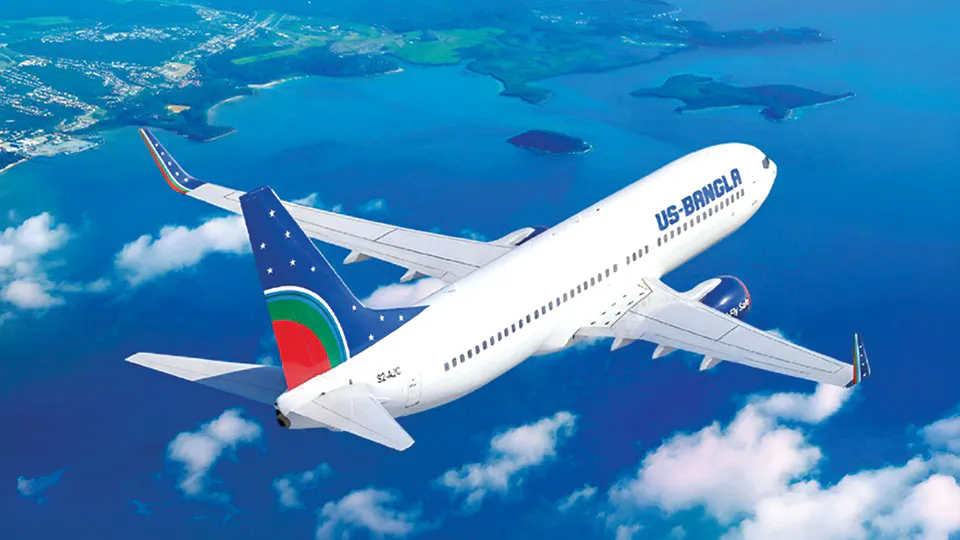
US-Bangla's 12-year journey reflects Bangladesh's growing aviation ambitions

Dhaka
: When US-Bangla Airlines launched operations in 2014 with a handful of
domestic flights, few could have predicted that within just over a decade it
would become Bangladesh's largest private airline, carrying over 20 million
passengers and operating one of the country's biggest commercial fleets.
The airline, which is celebrating its 12th anniversary this year, now operates 25 aircraft, serves 21 destinations across Bangladesh, South Asia, Southeast Asia, China, and the Middle East, and is preparing for what could become the largest expansion in its history with the planned acquisition of 21 additional Boeing aircraft by the end of 2027.
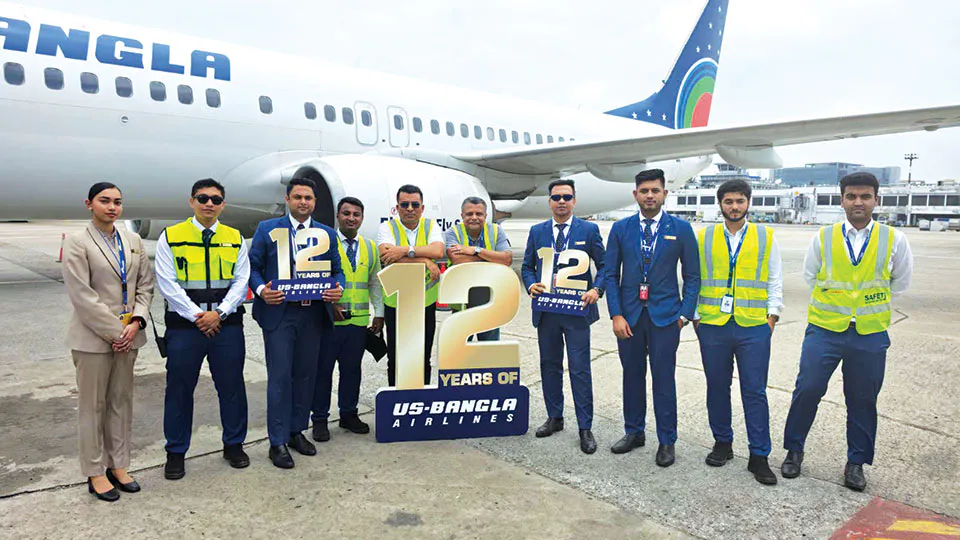 The airline’s officials celebrating their 12th anniversary
Its
growth mirrors the rapid evolution of Bangladesh's aviation sector, where
rising incomes, overseas employment, tourism and trade have fueled increasing
demand for air travel.
From
domestic carrier to Int'l airline
US-Bangla
began commercial operations in 2014, initially focusing on Bangladesh's
domestic market. At the time, the country's aviation industry was largely
dominated by Biman Bangladesh Airlines, while private carriers operated with
relatively limited networks.
Within a year, the airline obtained its Air Operator Certificate (AOC) for international operations, allowing it to expand beyond Bangladesh's borders.
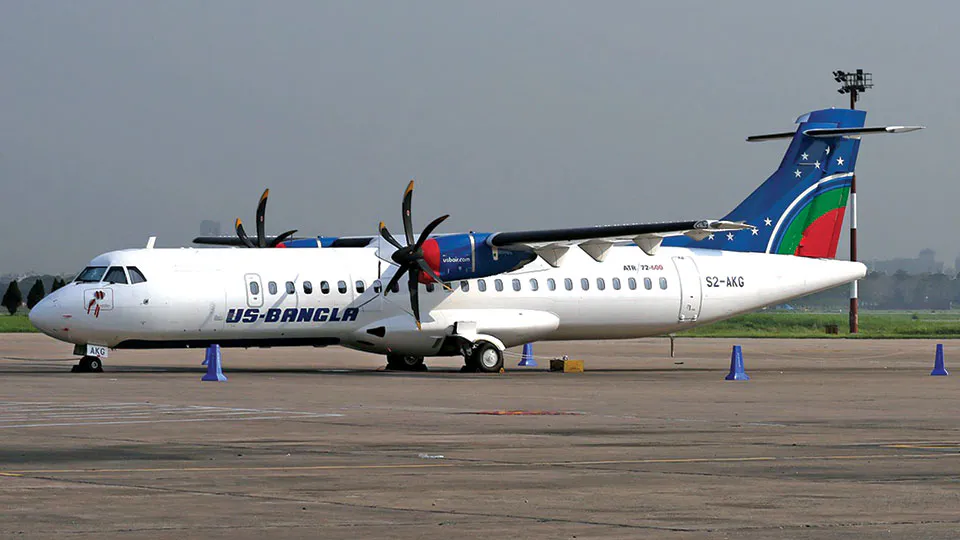 Domestic routes are operated with ATR aircraft
That
milestone opened the door to regional expansion and laid the foundation for
what would become one of the country's fastest-growing airline networks.
Boeing
aircraft changed game
The
airline entered a new phase in 2016 with the introduction of its first Boeing
737-800 aircraft.
The addition of jet aircraft significantly increased US-Bangla's operational capabilities, allowing it to serve longer international routes while offering greater passenger capacity and improved operating efficiency.
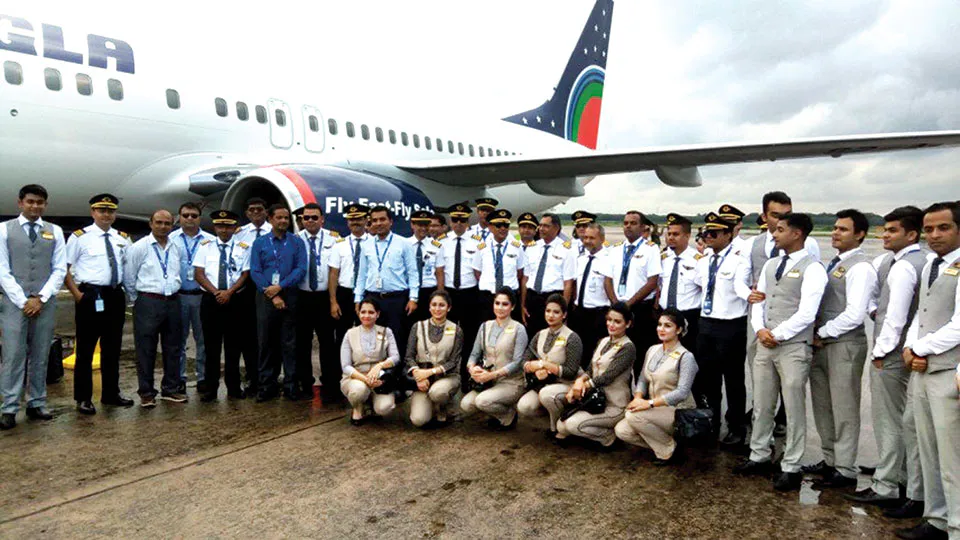 Airline staff receiving one of their Boeing aircraft
The
fleet expansion also marked the airline's transition from a primarily domestic
operator into a regional carrier capable of competing on key international
routes.
Dominating
domestic market
By
2017, US-Bangla had secured more than 50 percent of Bangladesh's domestic
passenger market, making it the country's leading airline in the local market.
The
achievement reflected increasing passenger confidence in the carrier's schedule
reliability, service quality and expanding route network.
The
airline continued building on that momentum in 2018 by launching flights to
Guangzhou in China and Chennai in India, strengthening Bangladesh's air
connectivity with two important business and trade destinations.
Expanding
fleet, network
US-Bangla
further diversified its fleet in 2019 with the induction of modern ATR 72-600
turboprop aircraft, which improved connectivity on domestic and short regional
routes.
The aircraft offered greater fuel efficiency while enabling the airline to serve airports with shorter runways more effectively.
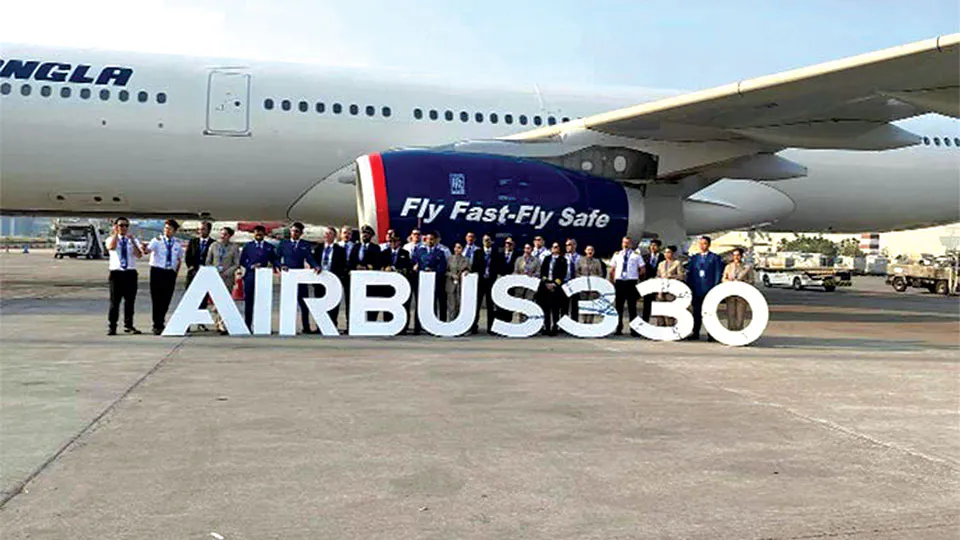 Induction of the airline’s first A330 aircraft
Over
the following years, the airline steadily expanded both its fleet and
destination network as demand for regional travel continued to recover.
Flying
through pandemic
Like
airlines worldwide, US-Bangla faced one of its biggest challenges during the
Covid-19 pandemic.
While
international travel largely came to a standstill in 2020, the airline
continued operating special repatriation flights to bring stranded Bangladeshi
citizens home from overseas.
Those
operations became one of the defining chapters of the airline's history, as
aviation shifted from commercial service to humanitarian support during the
global health crisis.
Middle
East expansion
As
international travel gradually recovered, US-Bangla resumed its expansion
strategy.
In
2021, it introduced flights to Dubai, Sharjah and the Maldives, while adding
two more Boeing 737 aircraft to support the growing international network.
The
Middle East routes proved particularly important, serving thousands of
Bangladeshi expatriate workers alongside business and leisure travelers.
The
airline continued expanding in 2022 by increasing both fleet size and regional
connectivity, strengthening its presence across South Asia and neighboring
markets.
Focus
on safety, talent
In
2023, US-Bangla achieved another significant milestone by becoming an
IOSA-registered operator, meeting the International Air Transport Association's
globally recognized operational safety standards.
The
same year, the airline launched a student pilot program, signaling its
intention to invest in Bangladesh's future aviation workforce rather than
relying solely on foreign-trained personnel.
Training
future pilots and engineers has since become a key pillar of the airline's
long-term strategy.
Long-haul
ambitions
Perhaps
the airline's most symbolic milestone came in 2024 with the introduction of
Bangladesh's first Airbus A330 into commercial service.
The
widebody aircraft enabled US-Bangla to launch direct flights to Jeddah and
Riyadh, significantly expanding capacity for Bangladeshi migrant workers and
religious travelers heading to Saudi Arabia.
The
A330 also demonstrated the airline's growing ambition to compete in longer-haul
international markets traditionally served by larger foreign carriers.
Award-winning
performance
By
2025, US-Bangla had expanded its network to more than 20 destinations while
earning the Best Domestic Airline award for the fourth consecutive year.
The
recognition reflected consistent operational performance and customer
satisfaction during a period when Bangladesh's aviation market was becoming
increasingly competitive.
Looking
beyond passenger flights
The
airline's ambitions now extend beyond passenger transport.
Alongside
its recently announced USD 1.5 billion Boeing fleet expansion, US-Bangla plans
to establish a comprehensive aviation ecosystem that includes aircraft
maintenance and repair facilities, cargo operations, flight catering services
and an aviation training academy.
The airline is currently training 200 pilots and 100 aircraft engineers, many of them overseas, as it prepares for future fleet growth.
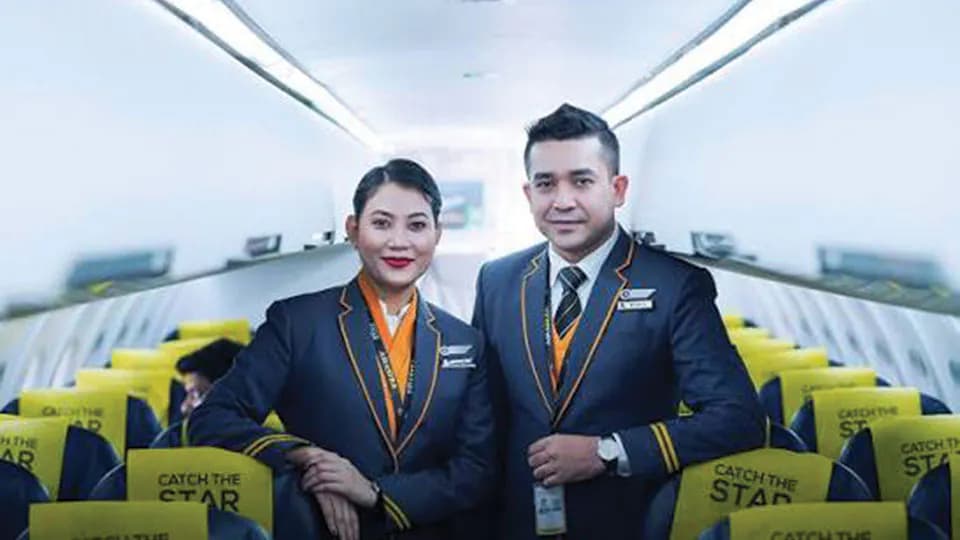
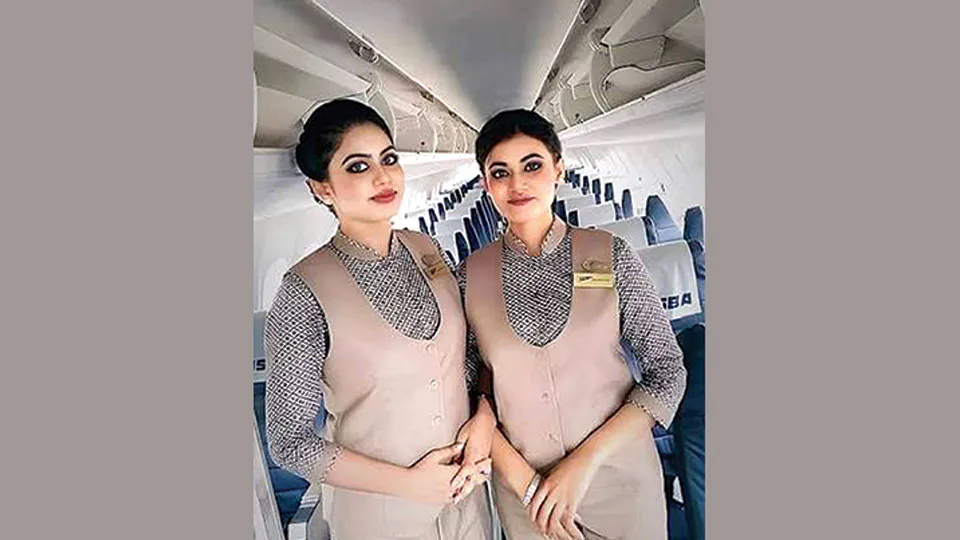 Cabin crew’s premium service onboard
It
also aims to develop Chattogram and Sylhet as regional international hubs,
reducing dependence on Dhaka while improving connectivity for travelers outside
the capital.
Larger
role in country's aviation future
Industry
analysts said, US-Bangla's growth reflects broader changes in Bangladesh's
aviation market.
Although
passenger demand has increased steadily over the past decade, foreign airlines
still carry the majority of international travelers to and from Bangladesh.
The
airline believes expanding the fleet, opening new destinations and investing in
aviation infrastructure could help Bangladeshi carriers capture a larger share
of that market while retaining more aviation revenue within the country.