

Jet fuel volatility creates fresh cost risks for airlines

Geneva
: Airlines are facing growing uncertainty over fuel expenses as structural
changes in global refining markets weaken the traditional link between crude
oil and jet fuel prices, according to an industry analysis by International Air
Trans-port Association (IATA).
Jet
fuel remains the largest operating cost for carriers and typically trades at a
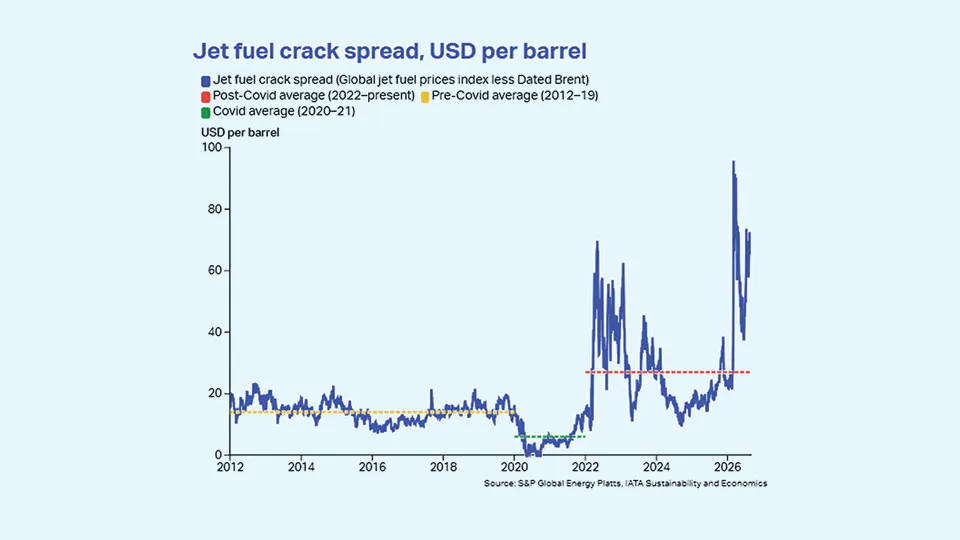
premium to crude. That difference, known as the jet fuel crack spread, has
historically moved closely with crude prices, allowing airlines to manage much
of their exposure through oil markets.
That
relationship has become less reliable since the post-pandemic recovery in oil
demand. The average crack spread is now more than USD 12 per barrel above its
pre-Covid level, while price swings have also become harder to predict.
A
major factor is the gradual reduction of refining capacity, particularly in
developed markets. As some regions become more reliant on refined-product
imports, supply disruptions in producing areas can have a greater effect on
local fuel prices.
The
International Maritime Organization's 2020 low-sulfur shipping rules have added
another layer of pressure. The regulations increased demand for middle
distillates, a group that includes diesel and jet fuel, supporting higher
premiums for these products.
Diesel
markets are particularly important because diesel profitability strongly
influences refinery operations. Disruptions in diesel supplies can therefore
tighten jet fuel availability and push prices higher.